


The Law and Society Association Honors its 2026 Award Winners!
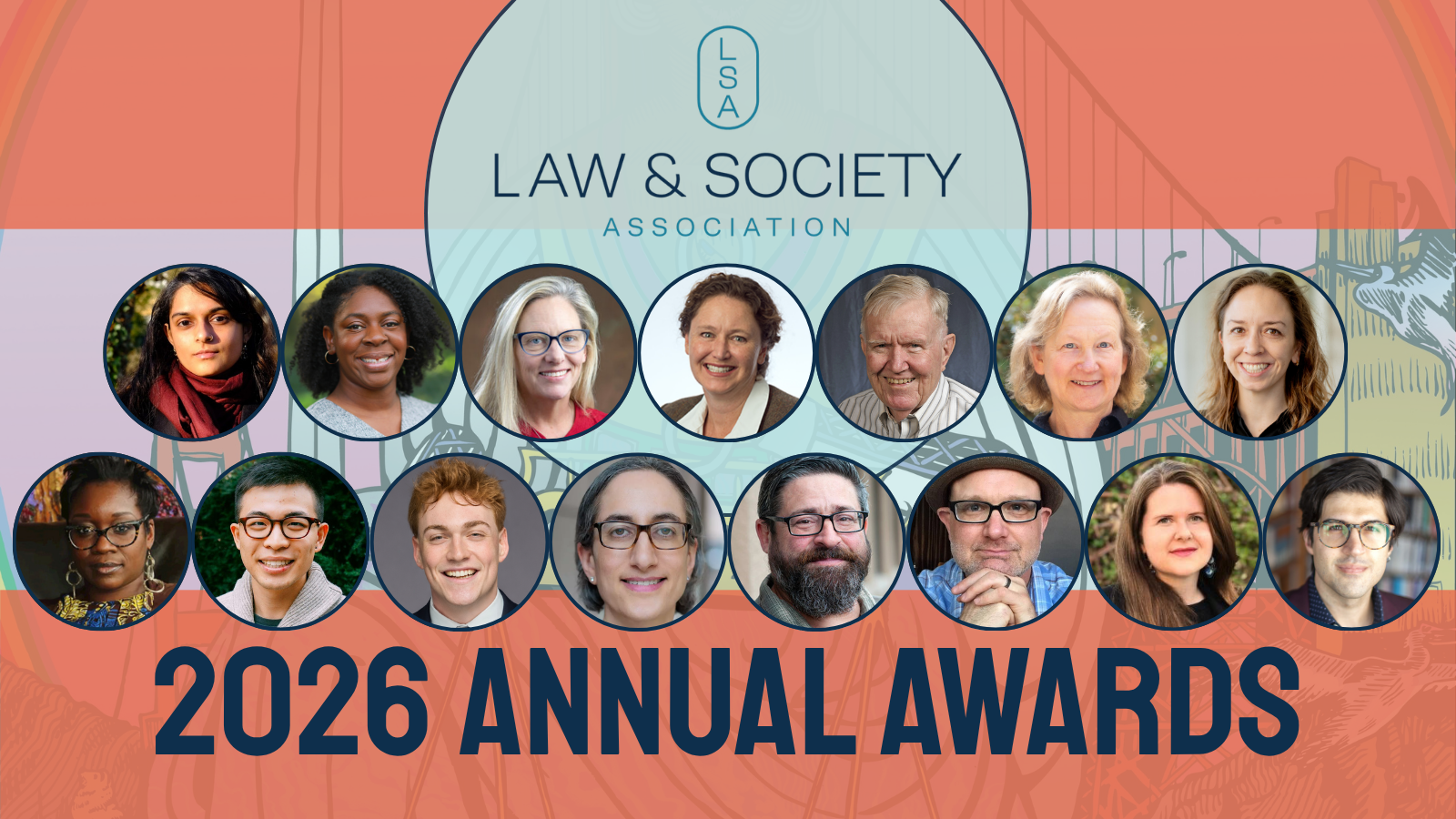 AMHERST, Mass. – The Law and Society Association extends a warm congratulations to the 15 winners of its 2026 Annual Awards.
LSA honors leading international scholars each summer for their groundbreaking publications and contributions to the study of law and society. To view more information about each of the winners, check out our Awards Page.
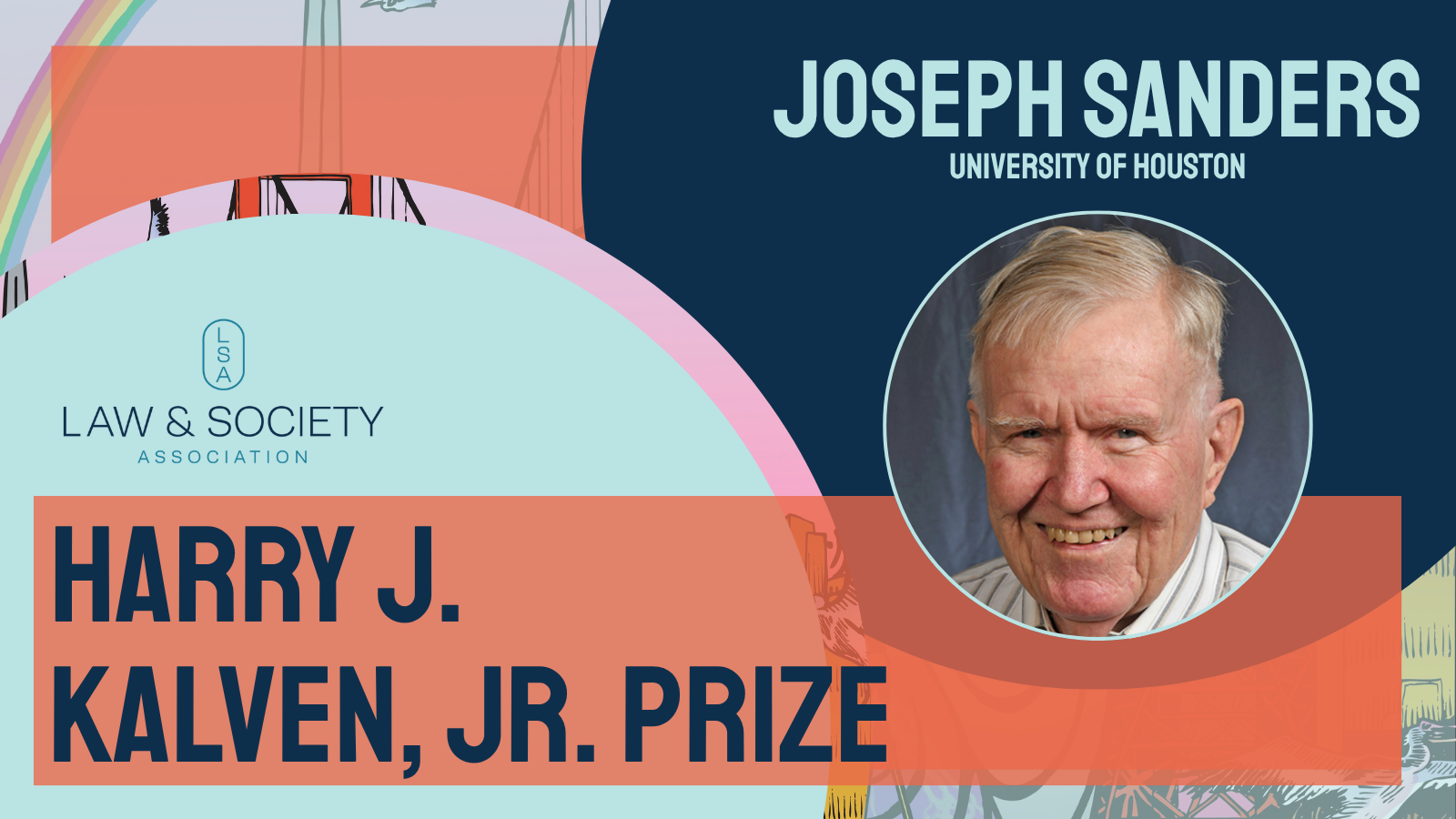 Harry J. Kalven, Jr. Prize
WINNER: Joseph Sanders
The Harry J. Kalven, Jr. Award “is given in recognition of a body of scholarly work,” to honor “empirical scholarship that has contributed most effectively to the advancement of research in law and society.” Joe Sanders is the A.A. White Professor of Law at the University of Houston Law School. He has worked at the intersection of law and social science for half a century. He has been actively involved in the Law & Society Association, serving as Editor of the Law & Society Review, as well as Book Review Editor. He has been a leading scholar in both the legal academic and law and social science worlds. He has coauthored several casebooks that exemplify conventional legal scholarship on evidence and torts. More important for the Kalven prize is his landmark work in law and social science, which ranges from pure sociology and social psychology to deep sociolegal research. With Richard Lempert he published a theoretically insightful Introduction to Law and Social Science (1986). His qualitative research takes an empirical dive into the cases, arguments, evidentiary and other issues arising in mass tort litigation. His work in this area focused on the Bendectin birth defect litigation that played a dominant role in the U.S. Supreme Court’s attempt to guide courts in handling scientific evidence. His close look at the Bendectin lawsuits resulted in several articles on that case and related topics, including the definitive book, Bendectin on Trial: A Study of Mass Tort Litigation (1998). Joe built on what he took from his Bendectin investigation to produce a series of articles on the role that science and expert evidence plays or should play in litigation. This stream of work led to coauthorship of important volumes directed largely at lawyers and judges, Modern Scientific Evidence (several editions from 1997 through 2018). Along with Lee Hamilton, he undertook an ambitious cross-cultural investigation of how citizens determine legal responsibility for wrongdoing. The project administered surveys in Russia, Japan, and the United States, a daunting task. It resulted in numerous articles and a book comparing Japan and the United States, Everyday Justice: Responsibility and the Individual in Japan and the United States (1992). For these many accomplishments, Joe Sanders deserves recognition with the Kalven Prize.
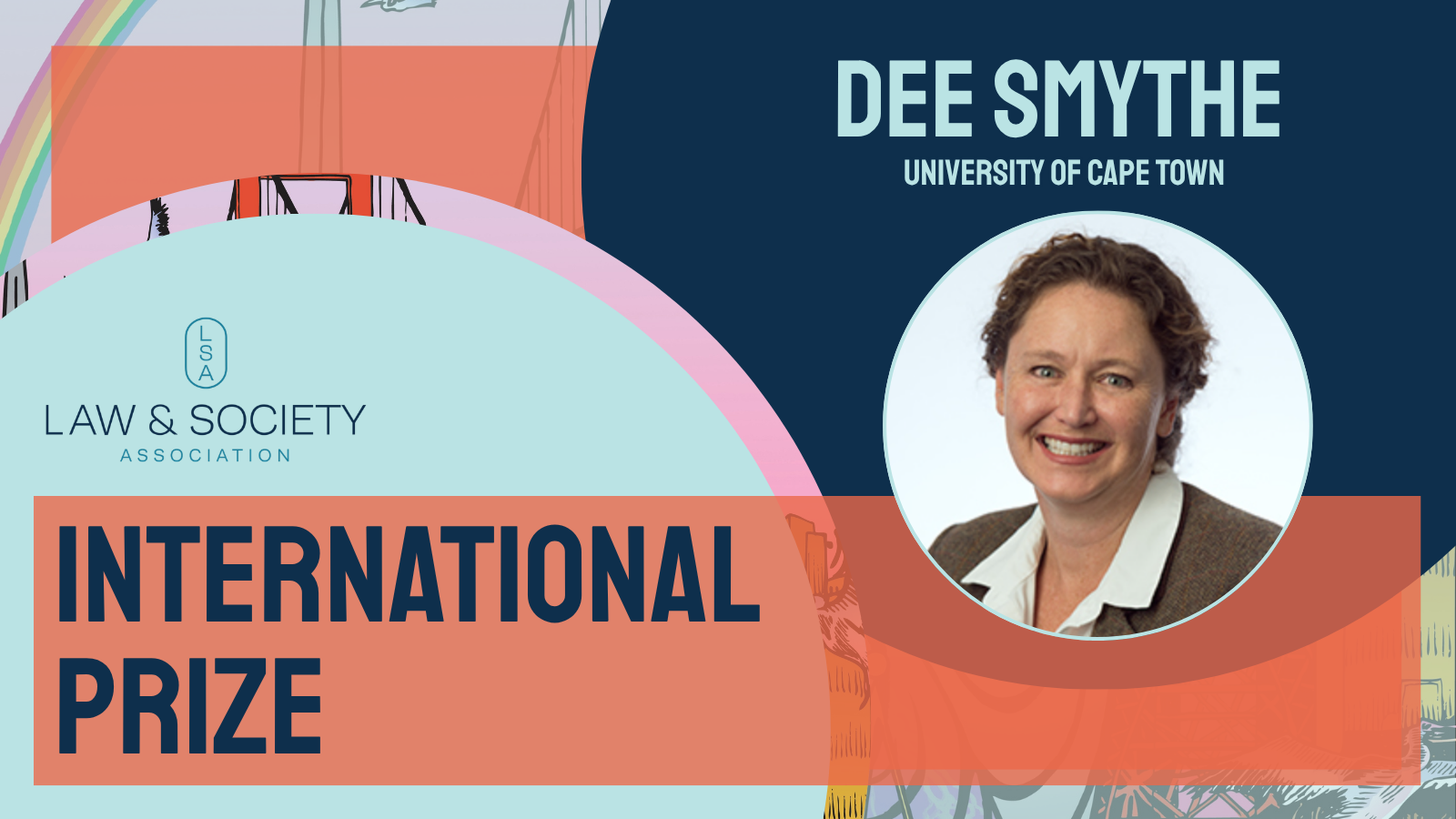 International Prize
WINNER: Dee Smythe
Professor Dee Smythe is one of the leading sociolegal scholars working in and on Africa today. Her scholarship exemplifies the intellectual rigor, interdisciplinary depth, and international engagement that the Law and Society Association International Prize seeks to recognize. Across more than two decades of scholarship, institutional leadership, and public engagement, Professor Smythe has made transformative contributions to the study of law, gender, violence, criminal justice, and social transformation in postcolonial and transitional societies.
Professor Smythe’s work has fundamentally shaped sociolegal understandings of state responses to gender-based violence, particularly in South Africa. Her scholarship consistently bridges empirical rigor with theoretical innovation, combining ethnographic, institutional, and doctrinal analysis to illuminate how law operates in contexts marked by inequality, colonial legacies, and social transition. Whether examining policing, rape law reform, customary law, access to justice, or the everyday functioning of criminal courts, her research demonstrates how legal systems simultaneously reproduce and contest social hierarchies and exclusion.
Her major publications include Rape Unresolved: Policing Sexual Offenses in South Africa; Should We Consent? The politics of rape law reform in South Africa (ed. with Lillian Artz) and the Sexual Offenses Commentary (ed. with Bronwyn Pithey), have become foundational contributions to sociolegal scholarship. Through these works, Professor Smythe has advanced critical conversations about legal reform, victimization, legal consciousness, and institutional power, while helping establish law and society scholarship in Africa as a vibrant and globally significant intellectual field.
Professor Smythe’s scholarship has systematically engaged with policy, advocacy, and institution-building. Her research has informed legal reform initiatives, parliamentary submissions, judicial training programs, and public policy debates concerning sexual offenses, domestic violence, rural governance, and human rights. Her scholarship exemplifies a deeply engaged sociolegal tradition in which academic inquiry is inseparable from broader struggles for social justice and democratic transformation.
Professor Smythe has also played a central role in expanding the international reach of the law and society community. At the University of Cape Town, she served as Founding Director of the Centre for Law & Society, Director of the Law, Race and Gender Unit, and Deputy Dean for Research, mentoring generations of sociolegal scholars and helping institutionalize interdisciplinary law and society research across the African continent. Internationally, she has been a major force within the Law and Society Association, serving as the Association’s inaugural International Coordinator of Global Activities, co-chairing the 2022 Global Meeting on Law and Society in Lisbon, and contributing extensively to the development of global scholarly networks and collaborative research initiatives. She has likewise played an important leadership role within the Research Committee on Sociology of Law of the International Sociological Association, where she currently serves as Vice President for Internationalization, and on the Governing Board/Patronato of the Oñati International Institute for the Sociology of Law.
Professor Smythe’s career reflects a profound commitment to the internationalization of sociolegal scholarship and to building intellectual spaces that center Global South perspectives and experiences. Her work continues to shape debates across law and society, sociolegal studies, criminology, feminist legal studies, and African studies, making her one of the most influential and internationally respected scholars in the field today.
 Herbert Jacob Book Prize
WINNER: Joshua Page and Joe Soss, Legal Plunder: The Predatory Dimensions of Criminal Justice
Legal Plunder is a significant contribution to socio-legal scholarship because it provides a rigorous, multi-layered analysis of how the American criminal justice system has evolved from a mechanism of public safety into one of financial extraction. The book’s central achievement lies in its development of the concept of “legal plunder”—the idea that legally sanctioned fines, fees, bail requirements, and privatized supervision programs systematically strip resources from vulnerable populations under the guise of legitimate governmental authority. By naming and theorizing this phenomenon, the authors give scholars and reformers a powerful conceptual framework for understanding how law itself can become an instrument of exploitation. The book excels in its depth of research and historical grounding that show how structural forces—not merely individual bad actors—produced a system in which punishment generates revenue for both public institutions and private companies. Its most important contribution to socio-legal scholarship is its intersectional analysis of how predatory criminal justice practices compound race, class, and gender inequality. Legal Plunder is a comprehensive and essential account of how American criminal justice – modern and historical – serves as a linchpin of American inequality. It is a truly outstanding achievement.
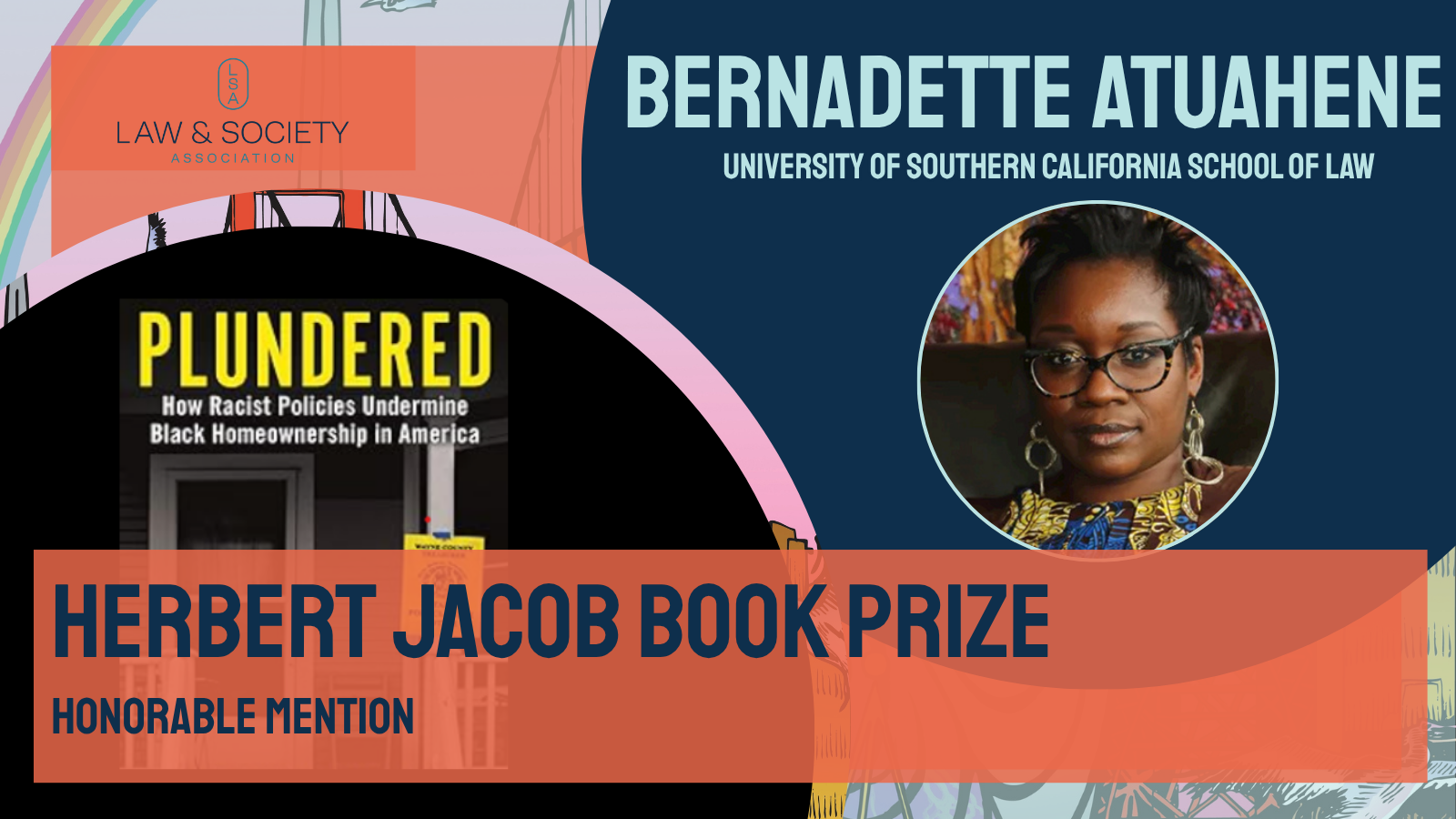 Honorable Mention: Bernadette Atuahene, Plundered: How Racist Policies Undermine Black Homeownership in America
Plundered makes a compelling and original contribution to socio-legal scholarship by reframing Detroit’s property tax foreclosure crisis not as a story of individual financial failure, but as a product of systemic, government-driven wealth extraction from Black communities. At its core, the book introduces the concept of “predatory governance,” defined as a system in which local governments raise public revenue through policies that intentionally or unintentionally target marginalized communities. This framework is a significant theoretical contribution, giving scholars and policymakers a vocabulary to describe how seemingly neutral administrative processes can produce deeply unequal outcomes. One of the book’s greatest strengths is its interdisciplinary methodology that combines legal doctrine, statistical analysis, historical contextualization, and deeply personal interviews with affected homeowners. Atuahene’s rigorous interview methodology ensures both ethical integrity and scholarly credibility. In sum, Plundered offers a powerful, well-documented model for how socio-legal research can bridge the gap between academic analysis and accessible public narrative.
 James Willard Hurst Book Prize
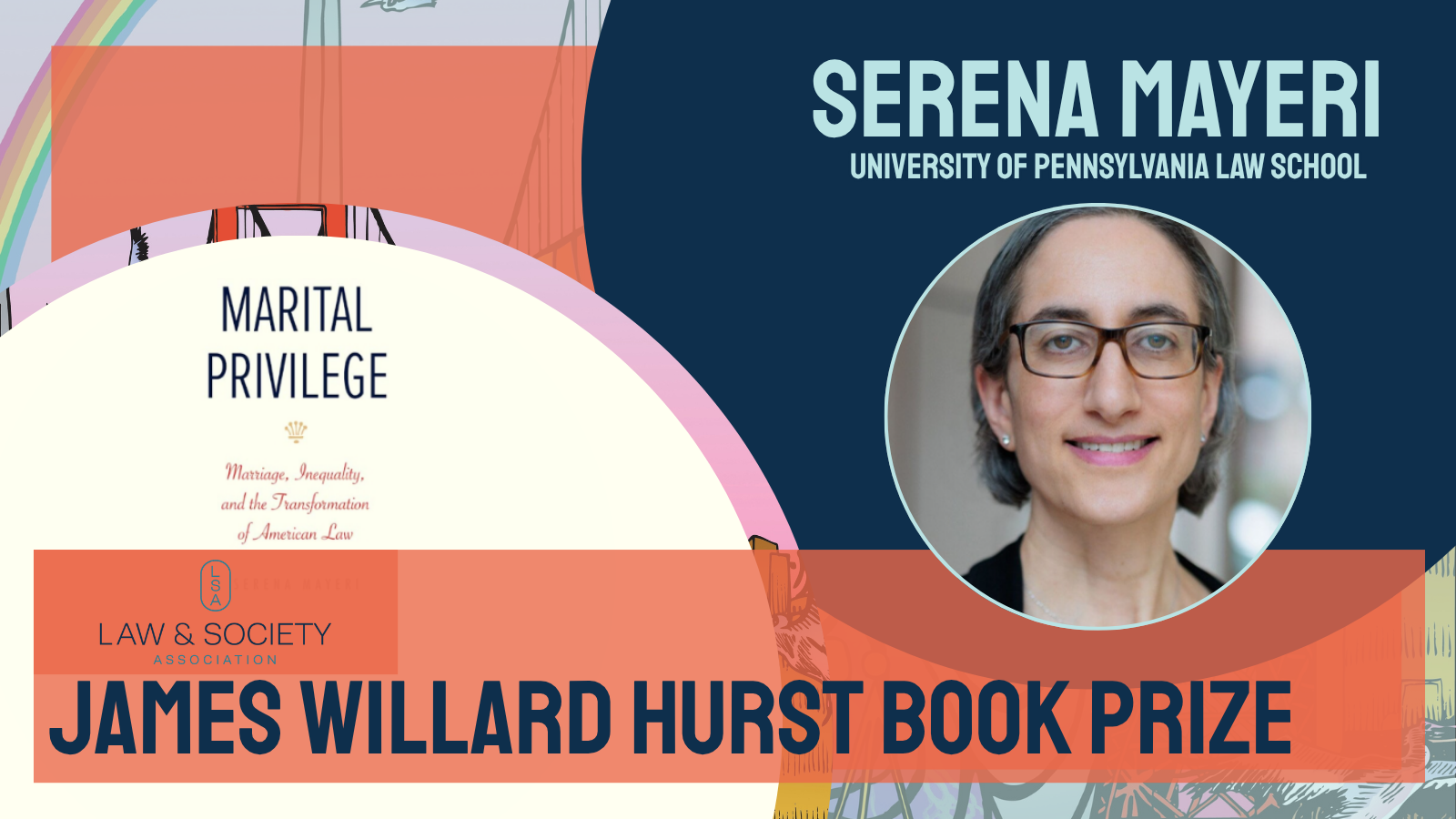
WINNER: Serena Mayeri, Marital Privilege: Marriage, Inequality, and the Transformation of American Law
Serena Mayeri’s Marital Privilege shows how, beginning in the 1960s, marriage was dislodged from its supreme position across a range of legal domains and replaced with a regime of “marital privilege.” With poignant, empathetic detail drawn from archives and legal documents, Mayeri brings to life both well-known and not-so-famous cases, revealing the theories and evolving strategies animating a wide range of challengers to the regime of marital supremacy—from litigants to advocacy organizations to legal academics. Yet, even as their victories advanced the values of nondiscrimination and individual autonomy, Mayeri shows how the assumptions of the new regime of “marital privilege” obscured and deepened inequalities of wealth, power, and privilege in American law and society. Combining sweeping ambition, doctrinal acumen, and a keen sense of historical contingency, Marital Privilege provides a magisterial account of a crucial transformation of American law.
 Law and Society Association Article Prize
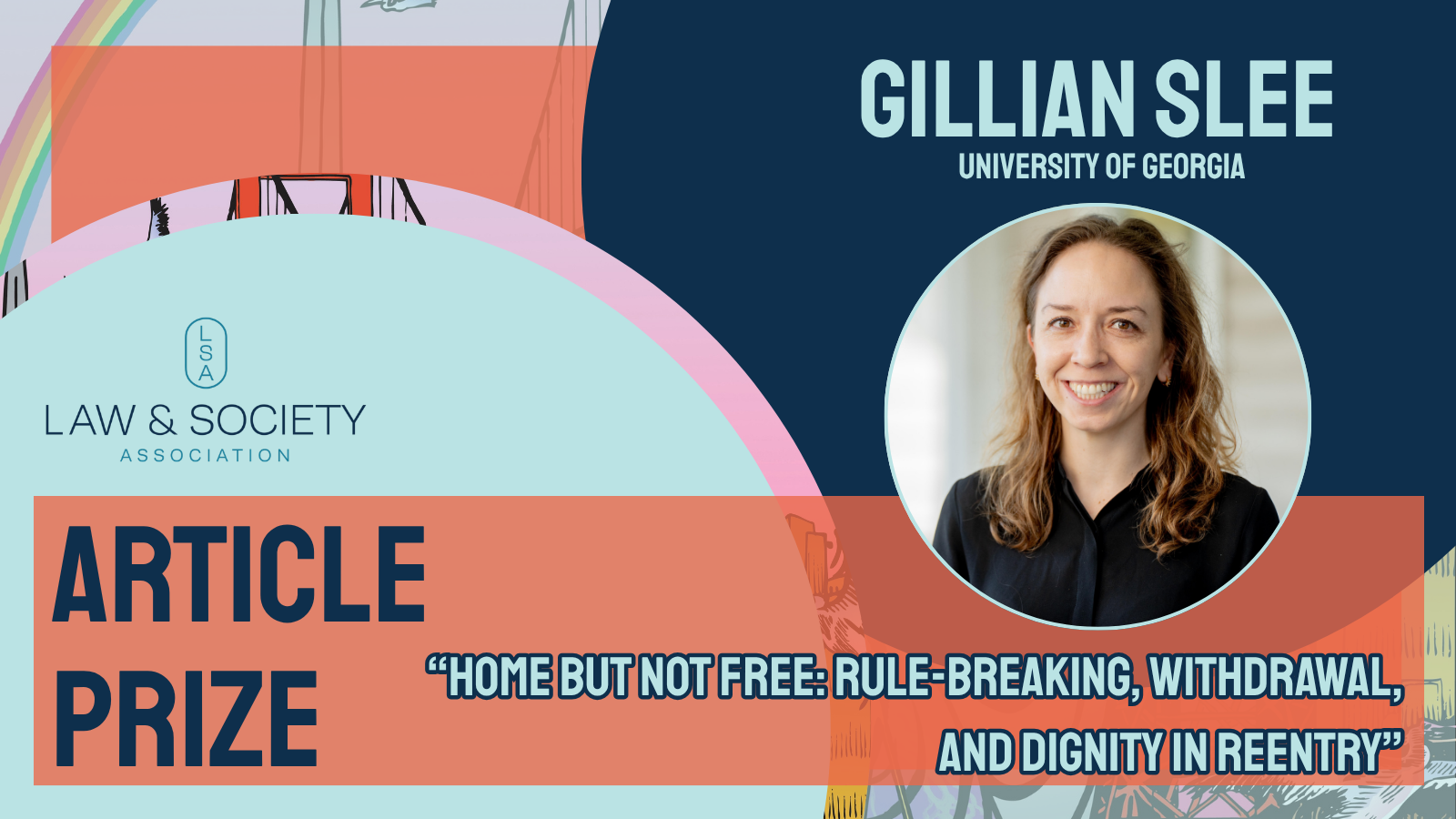
WINNER: Gillian Slee, “Home but not free: Rule-breaking, withdrawal, and dignity in reentry”
Drawing on more than two years of ethnographic field work with people under community supervision in Philadelphia, Gillian Slee’s article, “Home but not free: Rule-breaking, withdrawal, and dignity in reentry,” documents and analyzes the mismatch between the asserted rehabilitative aims of state supervision of reentry and the experiences of formerly incarcerated people. This is an ambitious empirical study of how the breakdown of personal dignity contributes to people’s violations of parole conditions and withdrawal from supportive services. Describing people’s frustrating efforts to use the state housing assistance program, for example, Slee reveals that the program is unresponsive to people’s financial and emotional constraints. Slee theorizes that this “unrecognized vulnerability,” a concept she develops across multiple examples, leads people to withdraw from the much-needed assistance. Moreover, Slee shows, the substantial discretion of program administrators, along with the manifold and byzantine rules, amount to threats to participants’ dignity and severe limits on their participation in social and kin networks, which leads to rule-breaking, resignation, resistance, and withdrawal. The paper concludes with several concrete suggestions for institutional redesign to empower more humane and effective systems. This article is empirically rich, theoretically significant, and highly readable.
 John Hope Franklin Prize
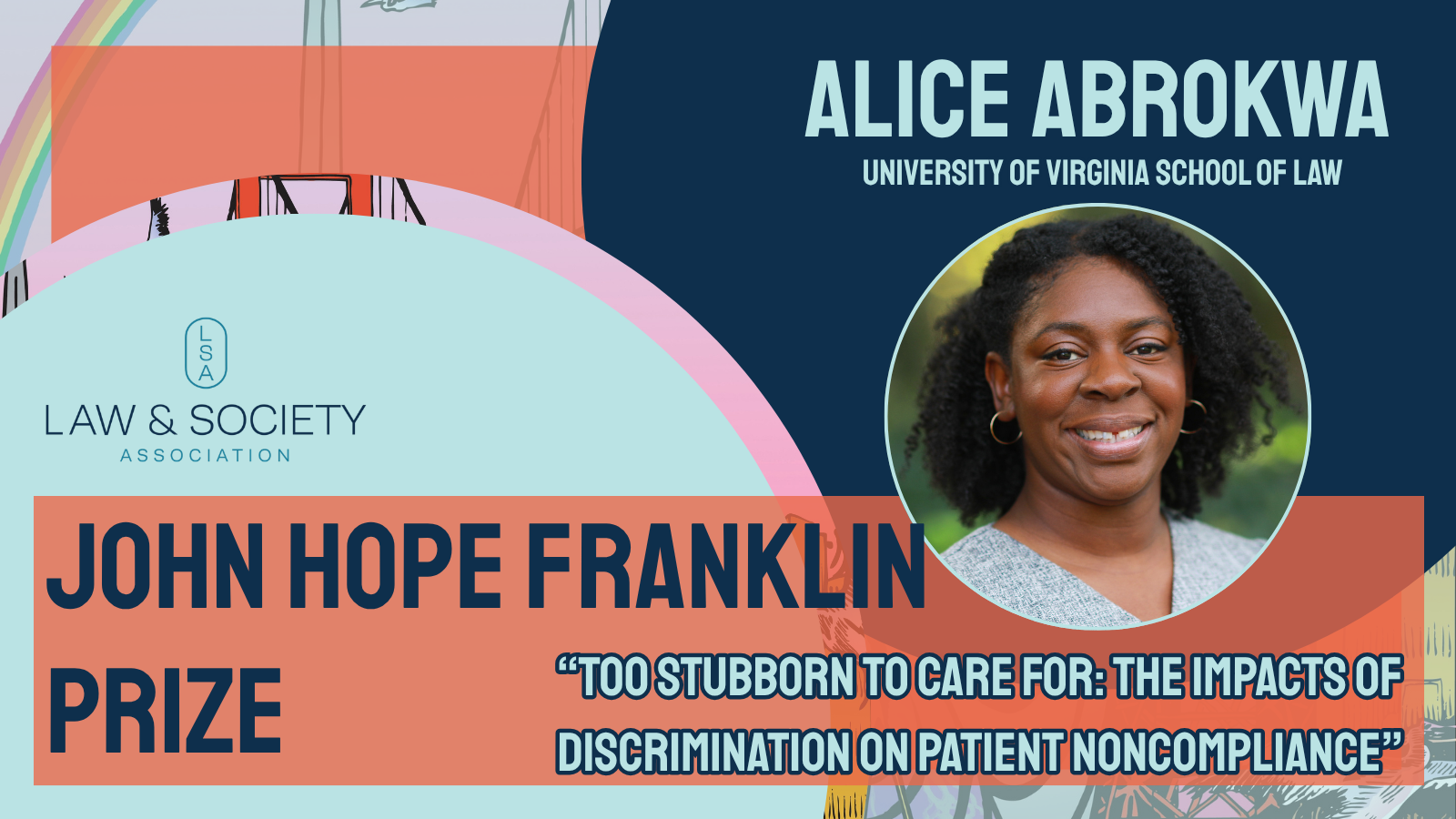
WINNER: Alice Abrokwa, “Too Stubborn to Care for: The Impacts of Discrimination on Patient Noncompliance”
Patient noncompliance is an enduring problem in clinical medicine, and researchers have documented both its prevalence as well as the disproportionate application of this label to racial minorities. Being characterized as noncompliant can have significant impacts on patients’ continued access to health care, which can further aggravate racial disparities in health. As Abrokwa notes, “the perception of noncompliance, as well as a patient’s actual noncompliance, becomes reason to not treat Black people’s pain seriously or at all.” (466) In Too Stubborn to Care For: The Impacts of Discrimination on Patient Noncompliance, Professor Abrokwa offers a brilliant intervention that highlights how patient noncompliance is often produced by medical providers rather than just the way some patients are. By drawing upon frameworks from disability rights to critical race theory, she develops a new approach that moves medicine away from treating compliance as an individual choice and towards an understanding that sees it as an interaction between patients, institutions, and practitioners. This creates new opportunities for reducing disparities and making health care more accessible.
 Law and Society Association Dissertation Prize
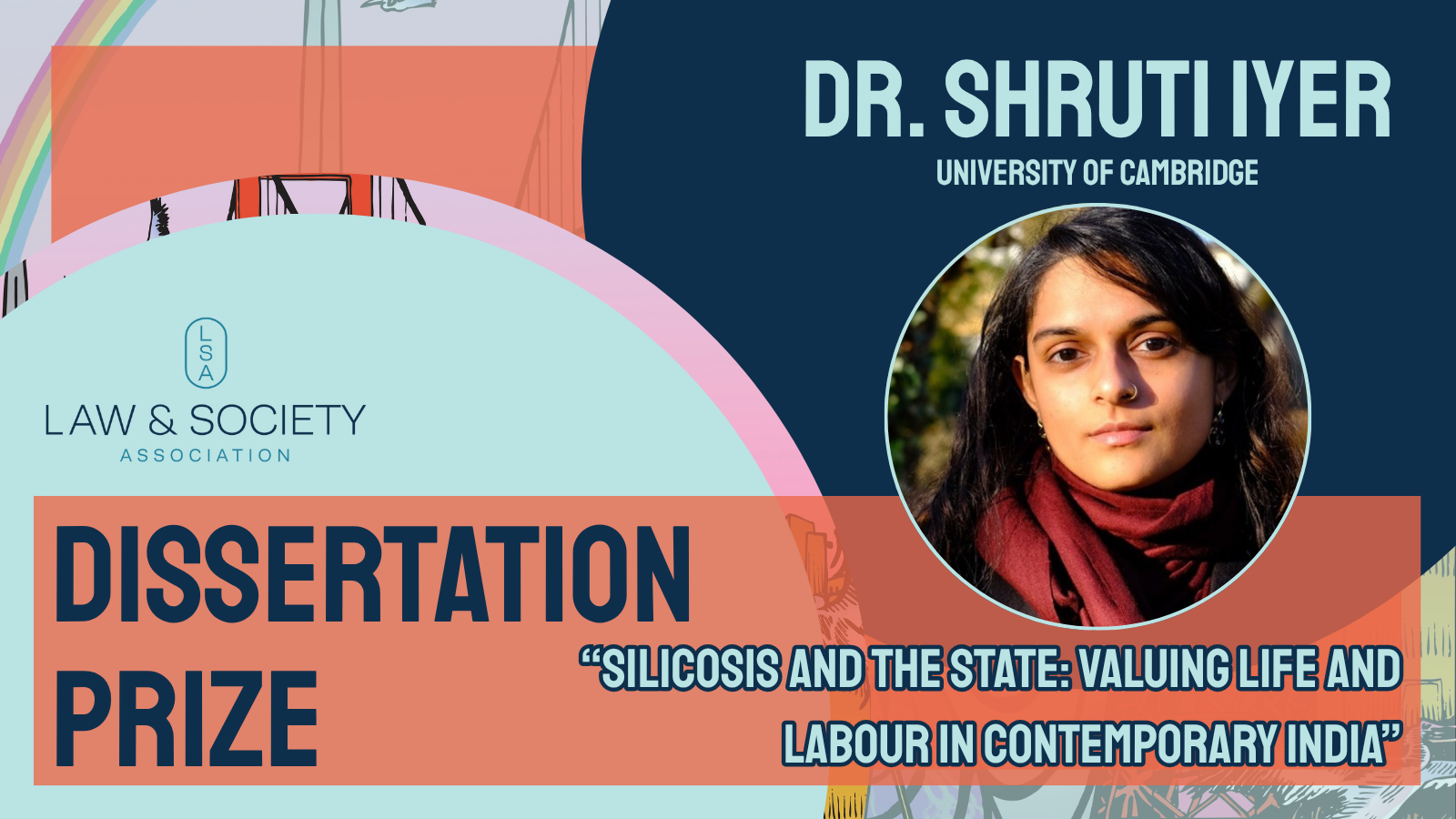
WINNER: Dr. Shruti Iyer, “Silicosis and the State: Valuing Life and Labour in Contemporary India”
The dissertation examines how silicosis, an incurable lung disease caused by prolonged exposure to silica dust, has become a site of political struggle involving workers, activists, and the state. Building on uniquely rich ethnographic work in Rajasthan, India, this research shows that, while the state designed silicosis compensation primarily as a humanitarian response to suffering—translating injury into monetary compensation through bureaucratic procedures, workers and activists reinterpret and mobilize these programs for broader political ends. The study shows that welfare institutions function not only as mechanisms of bureaucratic governance, but also as arenas where political claims, solidarities, and reinterpretations of state responsibility emerge.
The committee uniformly noted that this dissertation presented a vivid, engaging, and beautiful ethnography of a case and setting that were both unique and carefully connected to broader contexts and theories across a surprising breadth of disciplines and subject areas. The committee appreciated the dissertation’s intensive and rigorous methods, including both a detailed analysis of the legal development of the Indian government’s policy establishing a silicosis welfare scheme, as well as an intensive observation of the implementation of this policy on the ground, as negotiated by laborers, patients, doctors, and unions. In particular, we appreciated not only the author’s interdisciplinary engagement with literature from tort and labor law to medicine and public health to theories of welfare state action, but also their engagement with how differently-situated individuals make moral and political meaning of the law. Throughout, the author centered the agency of unexpected actors from factory laborers to terminally ill patients and their families. Not only does this dissertation analyze an impressive scale of empirical data, and interweave interdisciplinary perspectives on law, but the author also engages thoughtfully and transparently with their own challenges – from an initial interest in tort law that shifted with the investigation of the silicosis welfare policies to the class contrasts (and associated ethical dilemmas) inherent in being an elite urban researcher in rural working class settings.
In sum, by tracing silicosis across bureaucratic procedures, legal claims, and activist campaigns, this work shows how welfare programs can simultaneously individualize suffering and enable collective political mobilization.
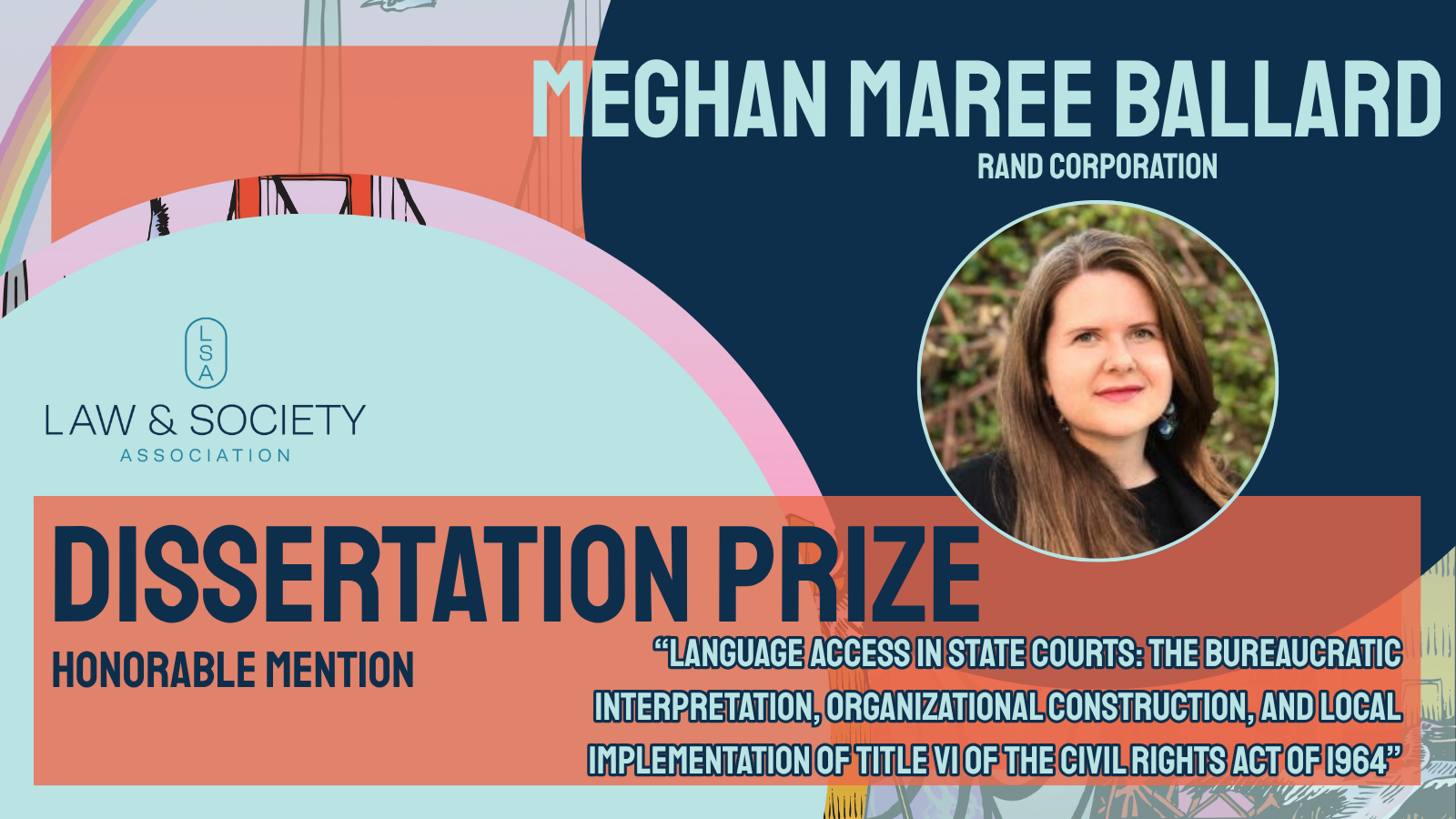 Honorable Mention: Meghan Maree Ballard, “Language Access in State Courts: The Bureaucratic Interpretation, Organizational Construction, and Local Implementation of Title VI of the Civil Rights Act of 1964″
Although Title VI of the U.S. Civil Rights Act of 1964 prohibits national origin discrimination, it does not explicitly address language. Courts and agencies have nevertheless interpreted it to encompass language discrimination, creating a framework for language access. In practice, however, implementation remains uneven: many courts limit or inconsistently provide interpretation services. Ballard’s dissertation investigates how ambiguity in the administrative enforcement of civil rights law creates space for variation in how institutions interpret and implement these obligations, resulting in unequal access to justice for individuals with limited English proficiency (LEP). This methodologically ambitious dissertation traces the interpretation of “meaningful language access” across federal interpretation, state organizational construction, and local implementation. By tracing this policy-to-practice pathway of language access, Ballard reveals how language rights are constructed through interactions among federal agencies, courts, and local actors. The dissertation’s crisply written prose and rigorous approach help to showcase both how important language access is and the myriad social forces that undermine its provision. Ultimately, the study demonstrates that, while language access is central to dignity and equality, it often settles into what Ballard terms “good enough” implementation.
By linking the study of immigration, civil rights enforcement, and court administration, the dissertation offers a significant contribution to law and society scholarship. It reveals how civil rights law travels across institutional levels and gets reshaped in practice.
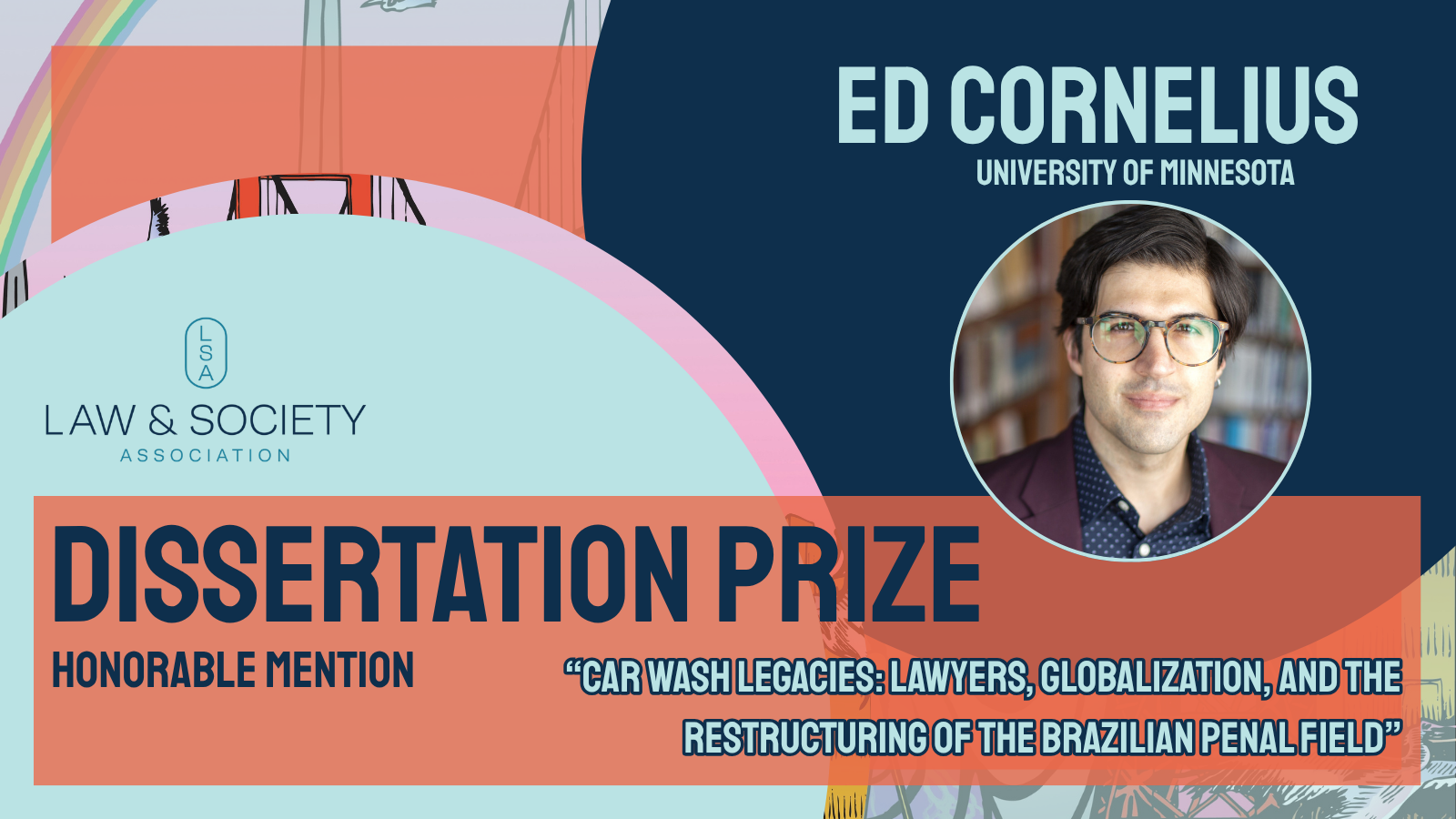 Honorable Mention: Ed Cornelius, “Car Wash Legacies: Lawyers, Globalization, and the Restructuring of the Brazilian Penal Field”
This impressive work draws on Bourdieusian theory to analyze the key roles of lawyers and law in penal change within Brazil’s anti-corruption campaign, known as “Operation Car Wash.” Drawing on extensive qualitative research, the dissertation examines how the legal legacy of this anticorruption investigation, which initially targeted powerful political and business elites, ultimately produced penal reforms that disproportionately affected marginalized defendants, rather than elites. Cornelius’s dissertation argues that this outcome should not be reduced to explanations about partisan politics. Instead, Cornelius’s dissertation suggests that prosecutors and judges sought to “democratize punishment” by importing punitive models from the Global North, but encountered resistance from elite defense lawyers and scholars advocating for a minimalist criminal law grounded in procedural safeguards. The analysis is based on more than a year of fieldwork carried out in Brazil in two different cities (Porto Alegre and Sao Paulo), as well as 116 interviews with prosecutors, defense attorneys, public defenders, professors, and state and federal justices; observations of 27 academic and other events; and a collection of speeches, hearings, legislation, and other documents related to legal reforms. This extensive material enables Cornelius to analyze two legal reforms: “Ten Measures Against Corruption” (2016) and an anti-crime package passed in 2019 and document how penal change emerges from struggles within the legal profession over competing legal ideas, rather than exclusively from legislative incentives.
Cornelius impressively sketched out major developments within Brazilian legal culture, smartly and effectively contextualizing nation-level processes of penal change within larger processes of the globalization of law. Marked by a confident voice and analytical sharpness, the dissertation is highly polished and unusually cohesive in its development. The resulting text reads much more like a finished book than a dissertation. By bridging the sociology of punishment and law and society scholarship, it offers a clear and original account of how legal actors and expertise shape penal reform.
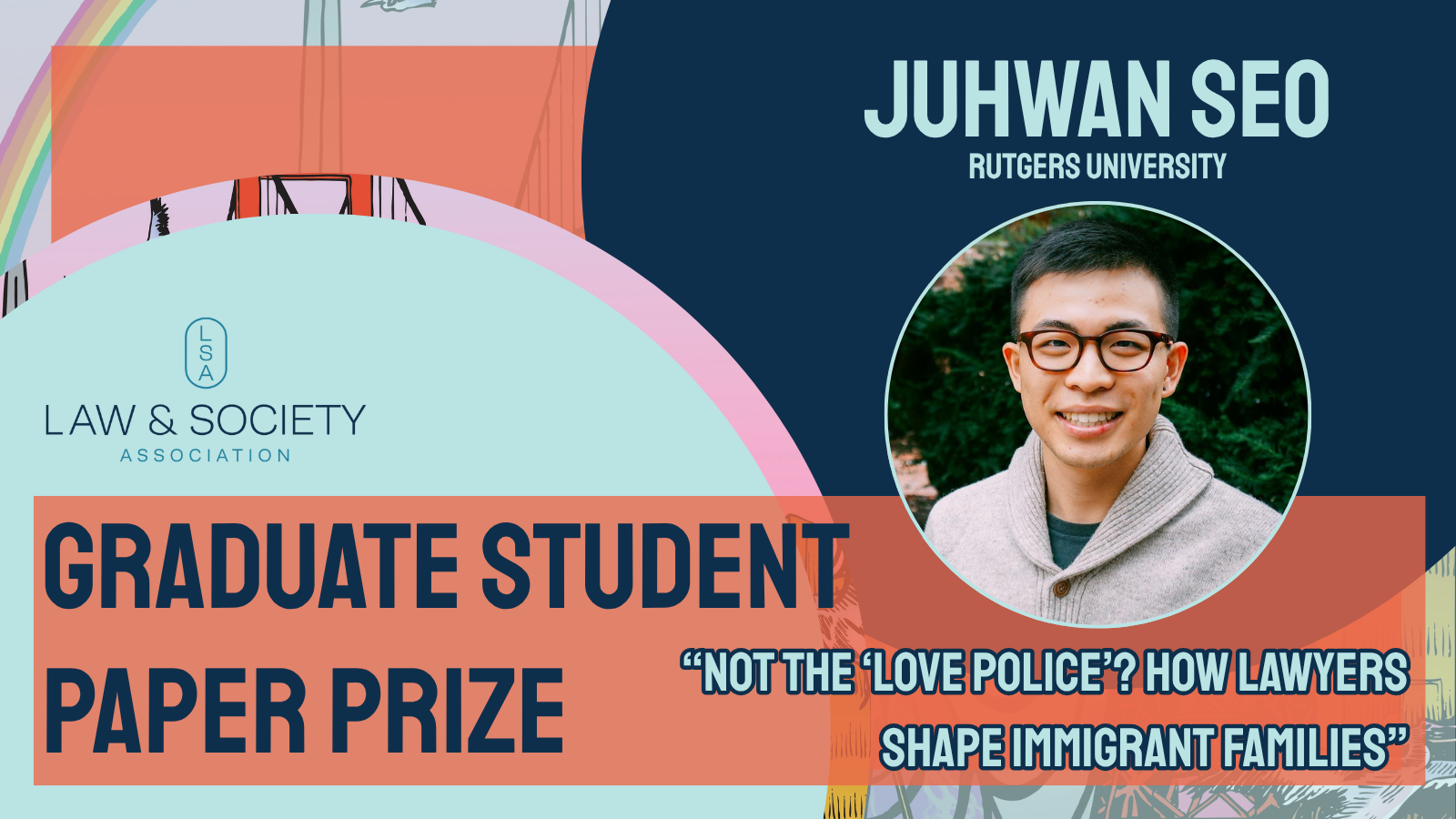 Law and Society Graduate Student Paper Prize
WINNER: Juhwan Seo, “Not the ‘Love Police’? How Lawyers Shape Immigrant Families”
Juhwan Seo has been selected as the winner of this year’s graduate student paper award. Seo’s well-written, thoughtfully developed, and timely paper examines the role of attorneys who guide mixed-status couples applying for marriage-based green card and naturalization petitions. Drawing on 36 in-depth interviews with immigration attorneys, paralegals, and nonprofit advocates, Seo observes the ways that legal professionals shape intimate dimensions of couples’ everyday lives so that they may be seen as “respectable” by the state. Attorneys translate immigration law into personalized checklists that serve as a kind of blueprint for marriage that couples must follow. Legal professionals instruct and correct family behaviors, they ensure they are routinized and documented–all to ensure that mixed-status couples conform to White, heteronormative, middle-class nuclear family norms. Seo expands on theories of social control, nonstate governance and lawyering to document the critical role that legal professionals play in coercing subjects toward American acculturation.
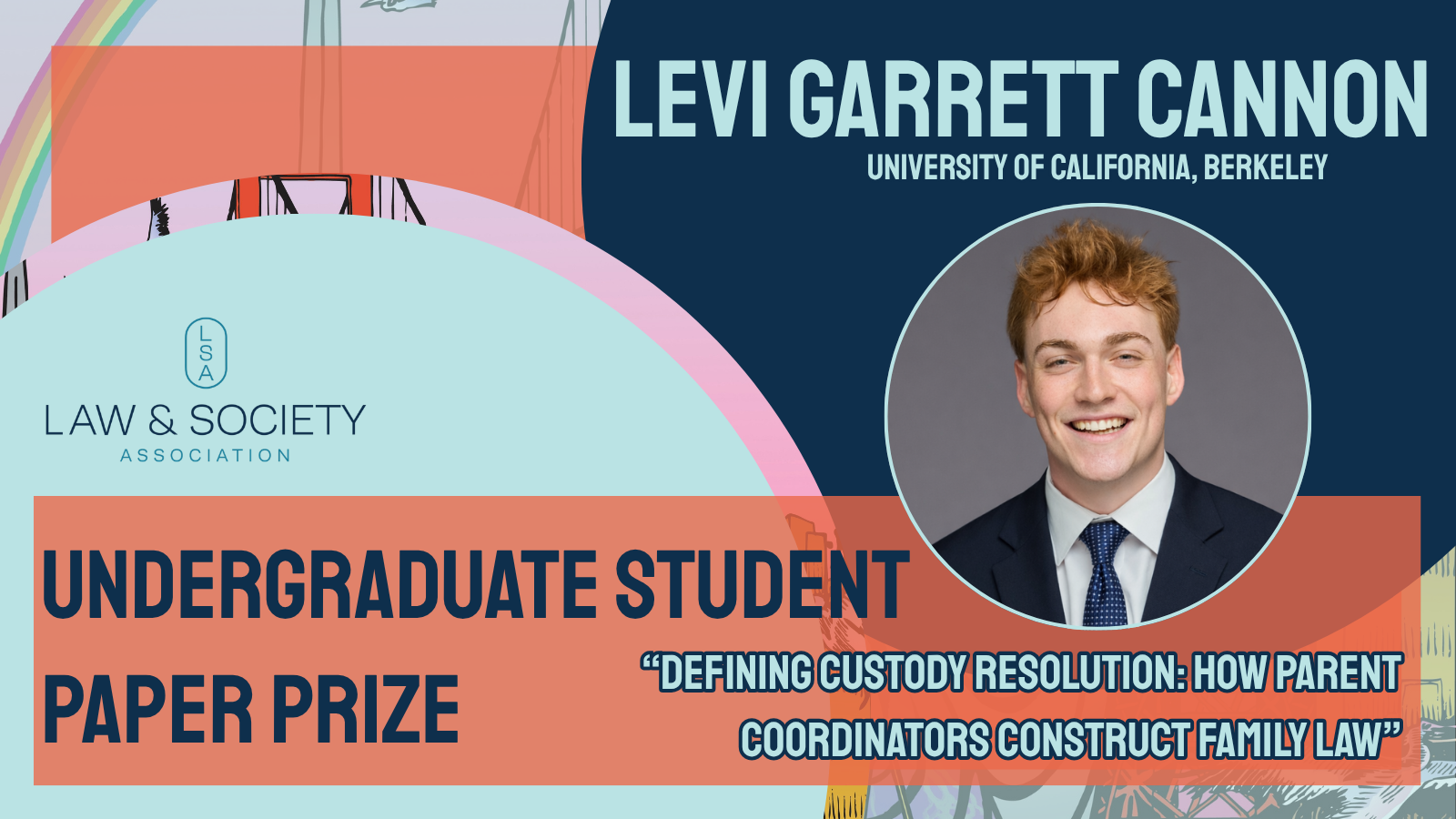 Law and Society Association Undergraduate Student Paper Prize
WINNER: Levi Garrett Cannon, “Defining Custody Resolution: How Parent Coordinators Construct Family Law”
Levi Garrett Cannon has been selected as the winner of this year’s undergraduate paper prize. Cannon’s impressive paper explores how parent coordination has emerged over the last four decades as an alternative dispute resolution (ADR) forum for high-conflict custody cases. Based on interviews with parent coordinators in a California county, the author deftly demonstrates how practitioners translate California family law into practice, in a context of vague standards and guidelines that vary across counties. In detailed fashion, Cannon examines the ways that coordinators exercise their considerable discretion, and the way that discretion is shaped by extra-legal factors such as contested psychological scholarship, the positions of professional organizations, and the teachings of popular parent coordination trainings. The result, they provocatively argue, is the potential erosion of the rights of both parents and children.
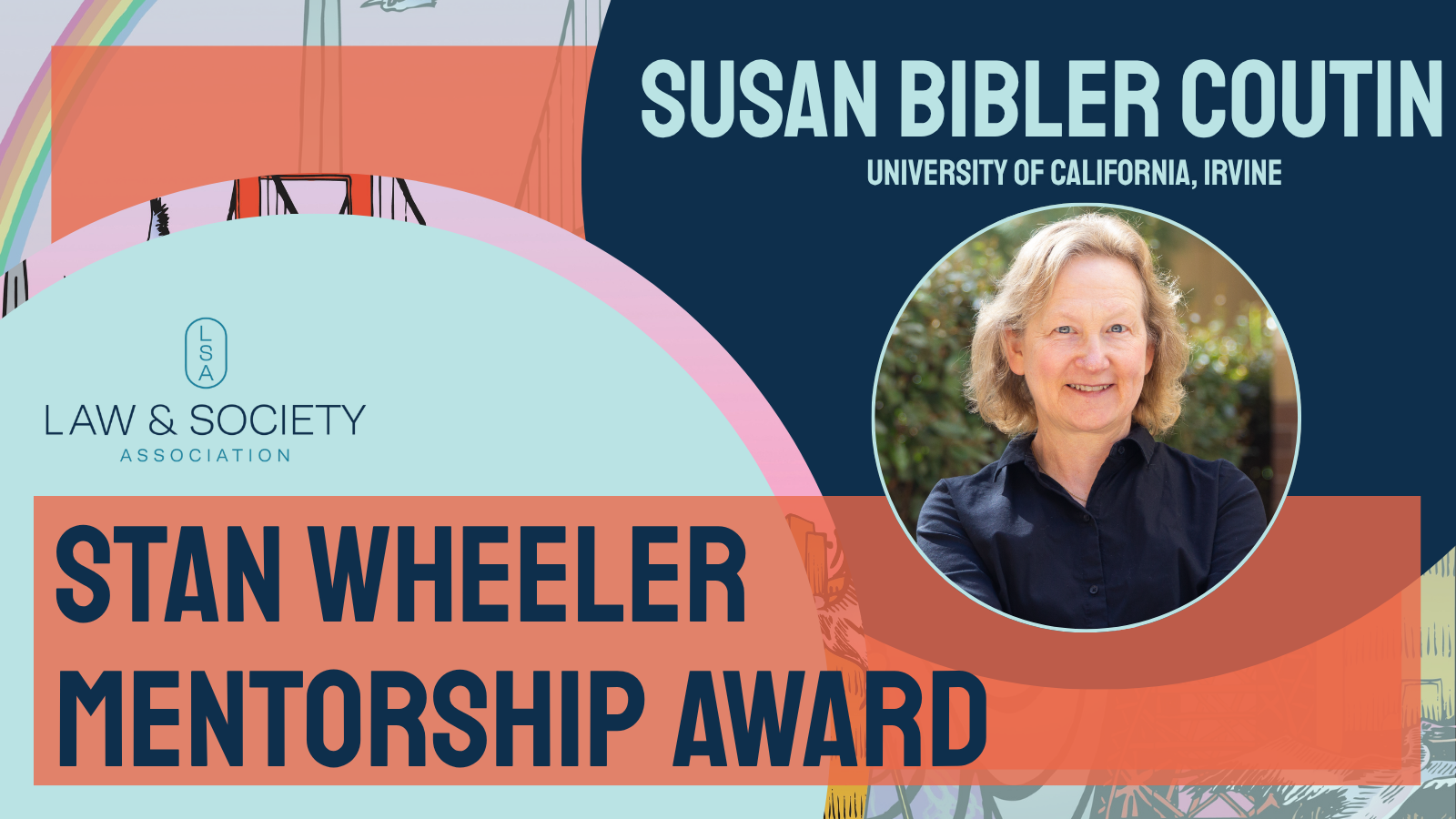 Stan Wheeler Mentorship Award
WINNER: Susan Bibler Coutin
We wholeheartedly endorse Prof. Coutin’s receipt of the 2026 Stan Wheeler Mentorship Award, and we offer this description culled from five detailed nomination letters (from four former doctoral students, now professors, and from one colleague, who described her mentorship of students in the Criminology, Law, and Society Department).
Prof. Coutin’s considerable strengths as mentor shine through in these letters. One nominator offered that “Susan provided unwavering guidance and support, encouraging me to pursue ambitious research goals while fostering my intellectual independence,” and this person described working as a research assistant to Coutin as well as co-authoring two articles and two chapters with her over the course of eight years. Another nominator wrote: “If you ask anyone who has been mentored by Susan, particularly her doctoral students, what she is like as a mentor, you will hear themes of encouragement, innovation, dedication, and creativity.” Another former student described Coutin’s mentoring style as including “stellar communication, ability to handle difficult situations, and clear commitment to student success.”
Multiple professors spoke about Prof. Coutin’s guidance during especially difficult points in their careers as Ph.D. students. One wrote, “Whether [it] be exploring new project ideas, providing critical feedback on writing, or pushing me to think through tough theoretical questions regarding the contribution and implications of my dissertation, she was supportive all the way. Whenever I raised concerns [about] my progress, Dr. Coutin…found ways to showcase my talents—whether that [was] sitting in on my lectures so that she could speak to my teaching abilities, recommending me for funding opportunities, or connecting me with colleagues based on research interests.” A different nominator described Coutin’s “compassionate” support when, during graduate school, her mother entered hospice care and then Coutin’s crucial role two years later at the dissertation writing stage: “Dr. Coutin recognized the severity of my writer’s block and offered various strategies to help me overcome it…[including] pretending I was talking to a loved one and explaining my dissertation. I imagined explaining the project to my mother, who was the inspiration for my dissertation and who had passed away…This technique was what finally got me writing again, and it was a critical turning point in my academic journey…”
Multiple letters wrote of structures Coutin formed to collectively support her graduate students (and foster their support of each other), including her creation in 2014 of the UC Irvine Law and Ethnography Lab, which Coutin herself has described (according to a letter) as a way to build an inter-disciplinary community of ethnographers. Coutin led bi-weekly meetings to provide support and to troubleshoot during students’ fieldwork, and within four years the group had grown from six to 20 graduate students, attracting overwhelmingly “female, BIPOC, and LGTBQ graduate students—a testament to the ‘safe space’ that Susan has cultivated.” Participants in the Lab, along with Coutin and another faculty co-leader, described its impact in a roundtable session at the 2021 LSA Annual Meeting. And in 2024 Coutin and others published an anthology to which 12 former lab participants contributed chapters, thus becoming a permanent testament to “Susan’s generous, thoughtful, and selfless mentorship.”
In conclusion, we are honored and delighted to unequivocally recommend the 2026 LSA Stan Wheeler Mentorship Award go to Professor Susan Bibler Coutin.
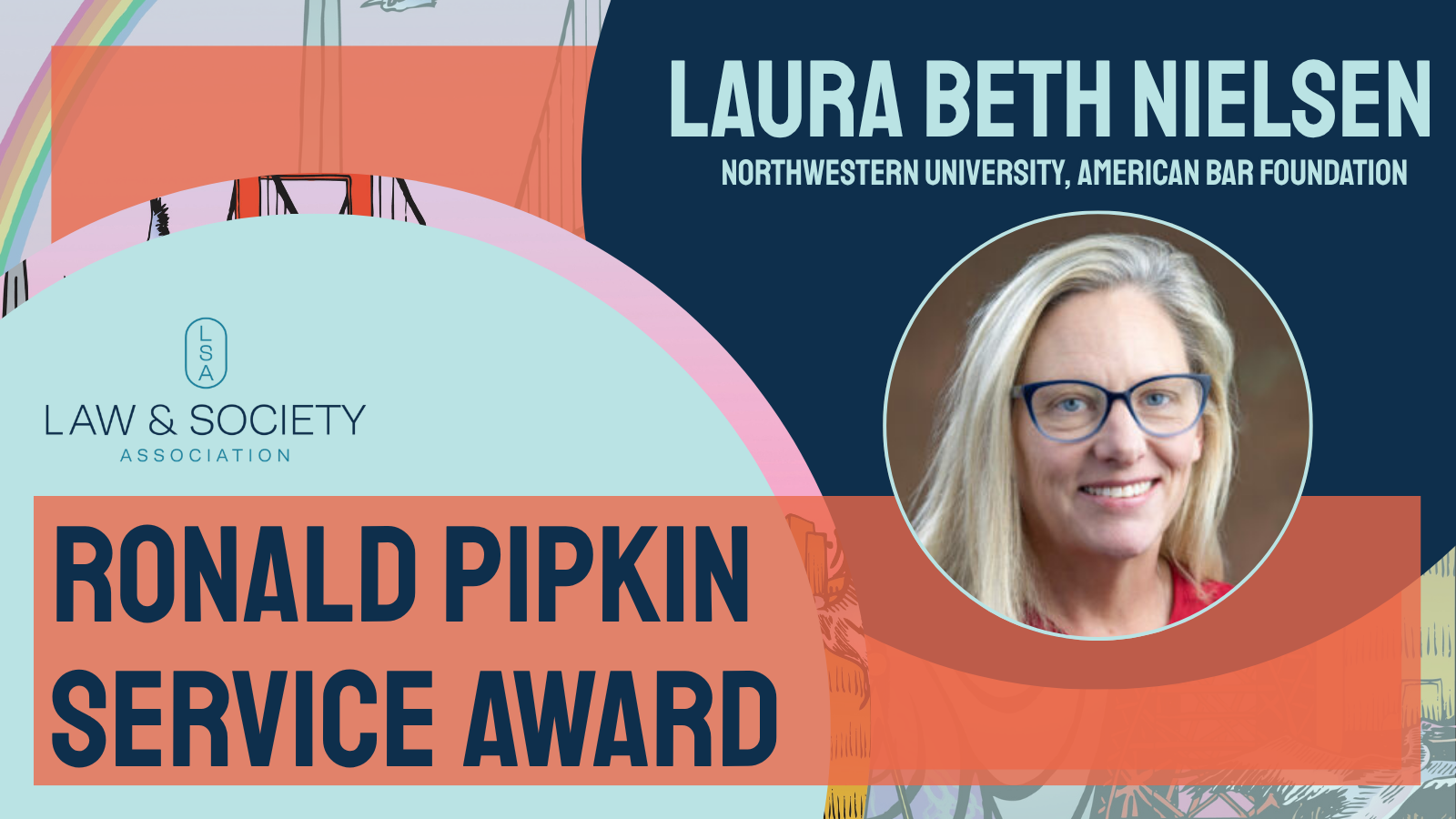 Ronald Pipkin Service Award
WINNER: Laura Beth Nielsen
LSA is honored to present the 2026 Ronald Pipkin Service Award to Professor Laura Beth Nielsen. Laura Beth is the Board of Lady Managers of the Columbian Exposition Chair, Professor of Sociology at Northwestern University, and Research Professor at the American Bar Foundation.
For over 25 years, Laura Beth has been a dynamic presence and committed leader within the Law and Society Association. She has served the Association with distinction as President (2021-23), Secretary (2011-13) and Trustee (2001-04). She has also chaired or co-chaired numerous committees, including multiple prize committees, the Program Committee (2004), Graduate Student Workshop (2010 and 2013) and this year’s Governance Committee.
Beyond her executive and committee service, Laura Beth has been integral to launching several critical LSA initiatives. Through her vision and extensive efforts, LSA established its endowment, substantially enhancing the Association’s ability to support sociolegal programming through the LSA Advance Grant. She was also instrumental in securing external grant funding for and managing the ABF/LSA Doctoral Fellowship in Law and Inequality.
Finally, one of her most significant contributions has been her steadfast mentoring of a generation of Law and Society scholars, for which she was recognized with the Stan Wheeler Mentorship Prize in 2018. Much like Ronald Pipkin himself, perhaps her greatest contribution has been her willingness to step in whenever and wherever she has been needed to ensure the continuing success of the Association. In this domain, no task has been too small or quirky (see, e.g., leading the flashmob for the LSA 50th Anniversary celebration at the 2014 meeting in Minneapolis).
Through her formal efforts within the Association and informal role as one of LSA’s greatest ambassadors, Laura Beth has been a shining example of dedicated service that has created a tremendously positive impact on the Association.
LSA kicks off its 2026 Annual Meeting on Thursday, May 28. Visit this year’s conference website to learn more.
2026 LSA AWARDS
Harry J. Kalven Jr. Prize
Joseph Sanders | University of Houston
International Prize
Dee Smythe | University of Cape Town
Herbert Jacob Book Prize
Joshua Page & Joe Soss | University of Minnesota
Honorable Mention – Bernadette Atuahene | University of Southern California School of Law
James Willard Hurst Book Prize
Serena Mayeri | University of Pennsylvania Law School
Law and Society Association Article Prize
Gillian Slee | University of Georgia
John Hope Franklin Prize
Alice Abrokwa | University of Virginia School of Law
Dissertation Prize
Dr. Shruti Iyer | University of Cambridge
Honorable Mention – Meghan Maree Ballard | RAND Corporation
Honorable Mention – Ed Cornelius | University of Minnesota
Graduate Student Paper Prize
Juhwan Seo | Rutgers University
Undergraduate Student Paper Prize
Levi Garrett Cannon | University of California, Berkeley
Stan Wheeler Mentorship Award
Susan Bibler Coutin | University of California, Irvine
Ronald Pipkin Service Award
Laura Beth Nielsen| Northwestern University, American Bar Foundation