

ABOUT LSA
Every year, the LSA recognizes great achievements in the field of Law and Society. Each award has a Prize Committee that reviews nominations and selects winners. An LSA membership is required to submit an awards nomination.
PRIZE
Harry J. Kalven, Jr. Prize
The Harry J. Kalven, Jr. Prize is awarded annually (biennially prior to 1999) for “empirical scholarship that has contributed most effectively to the advancement of research in law and society.”
Nominations are open to all forms of law and society scholarship, and from any country of origin, although copies submitted to the committee must be in English.
It is not a book award, nor is it a career achievement award, but is given in recognition of a body of scholarly work, including some portion of work having been completed within the past few years. Self-nominations are accepted.
The award carries a cash prize of $500.
Current Winner

Joseph Sanders – University of Houston
The Harry J. Kalven, Jr. Award “is given in recognition of a body of scholarly work,” to honor “empirical scholarship that has contributed most effectively to the advancement of research in law and society.” Joe Sanders is the A.A. White Professor of Law at the University of Houston Law School. He has worked at the intersection of law and social science for half a century. He has been actively involved in the Law & Society Association, serving as Editor of the Law & Society Review, as well as Book Review Editor. He has been a leading scholar in both the legal academic and law and social science worlds. He has coauthored several casebooks that exemplify conventional legal scholarship on evidence and torts. More important for the Kalven prize is his landmark work in law and social science, which ranges from pure sociology and social psychology to deep sociolegal research. With Richard Lempert he published a theoretically insightful Introduction to Law and Social Science (1986). His qualitative research takes an empirical dive into the cases, arguments, evidentiary and other issues arising in mass tort litigation. His work in this area focused on the Bendectin birth defect litigation that played a dominant role in the U.S. Supreme Court’s attempt to guide courts in handling scientific evidence. His close look at the Bendectin lawsuits resulted in several articles on that case and related topics, including the definitive book, Bendectin on Trial: A Study of Mass Tort Litigation (1998). Joe built on what he took from his Bendectin investigation to produce a series of articles on the role that science and expert evidence plays or should play in litigation. This stream of work led to coauthorship of important volumes directed largely at lawyers and judges, Modern Scientific Evidence (several editions from 1997 through 2018). Along with Lee Hamilton, he undertook an ambitious cross-cultural investigation of how citizens determine legal responsibility for wrongdoing. The project administered surveys in Russia, Japan, and the United States, a daunting task. It resulted in numerous articles and a book comparing Japan and the United States, Everyday Justice: Responsibility and the Individual in Japan and the United States (1992). For these many accomplishments, Joe Sanders deserves recognition with the Kalven Prize.
Past Winners
Year
Individual(s)
Affiliation
2025
Valerie P. Hans
Cornell University
Robert L. Nelson
American Bar Foundation, Northwestern University
2024
Tom Baker
University of Pennsylvania
2023
Christopher Lawrence Tomlins
University of California, Berkeley
Michael McCann
University of Washington
2022
Herbert M. Kritzer
University of Minnesota
Elizabeth Mertz
American Bar Foundation & University of Wisconsin
2021
Joachim J. Savelsberg
University of Minnesota
2020
Terence C. Halliday
American Bar Foundation
Margaret Kwoka
University of Denver-Sturm College of Law
2019
Bryant Garth
University of California, Irvine, Law
2018
Lauren B. Edelman
University of California, Berkeley
2017
David Engel
SUNY, Buffalo
Neil Vidmar
Duke University
2016
Mariana Valverde
University of Toronto
2015
Malcolm Feeley
University of California, Berkeley
Kitty Calavita
University of California, Irvine
2014
Theodore Eisenberg
Cornell University
Kim Lane Scheppele
Princeton University
2013
Donald Black
University of Virginia
Franklin Zimring
University of California, Berkeley
2012
John Hagan
2011
Carol J. Greenhouse
Boaventura de Sousa Santos
2010
Shari Seidman Diamond
2009
Susan S. Silbey
2008
Jean Comaroff, John Comaroff
2007
Sally Engle Merry
2006
Robert A. Kagan
2005
Sally Falk Moore
2004
John Braithwaite
2003
Philip Selznick
2002
Jane Collier
David Trubek
2001
Stuart Scheingold
2000
E. Allan Lind, Tom R. Tyler
1999
Martha L. Fineman
Joel F. Handler
1997
Richard Lempert
Austin Sarat
1995
Stewart Macaulay, Laura Nader
1993
Marc Galanter
1992
Lawrence Friedman
1989
Richard Abel
1987
John Heinz and Edward Lauman
David Baldus, Charles Pulaski, George Woodworth
1983
Hans Ziesel
Nominations Require:
- A letter of support from the nominator
- The candidate’s curriculum vitae
- 1 of 2 additional letters of support will be accepted, but are not required.
All supporting documents must be submitted in English and be in .DOC, .RTF, or .PDF format.
PRIZE
Herbert Jacob Book Prize
The Herbert Jacob Book Prize annual competition is open to books from all fields of, and approaches to, law and society scholarship published in the previous year (excluding works of legal history, which are considered for the Hurst Prize).
Textbooks, casebooks, and edited collections are not eligible for the award, but monographs will be considered. Nominations are accepted from all aspects of the field and any country of origin and may include first books of young scholars and books that are capstones of long careers in law and society research and publication. Self nominations are accepted. Nominators must be current LSA members.
The responsibility of ensuring that a work is submitted for the most appropriate book prize rests with the nominator. As a rule of thumb, books that have a significant historical focus should be directed to the Hurst Prize, while other works of socio-legal scholarship should be directed to the Jacob Prize. A book submitted for both prizes may end up being considered for neither.
The award carries a cash prize of $500.
Current Winners


Joshua Page, Joe Soss – University of Minnesota
Legal Plunder: The Predatory Dimensions of Criminal Justice (University of Chicago Press, 2025)
Legal Plunder is a significant contribution to socio-legal scholarship because it provides a rigorous, multi-layered analysis of how the American criminal justice system has evolved from a mechanism of public safety into one of financial extraction. The book’s central achievement lies in its development of the concept of “legal plunder”—the idea that legally sanctioned fines, fees, bail requirements, and privatized supervision programs systematically strip resources from vulnerable populations under the guise of legitimate governmental authority. By naming and theorizing this phenomenon, the authors give scholars and reformers a powerful conceptual framework for understanding how law itself can become an instrument of exploitation. The book excels in its depth of research and historical grounding that show how structural forces—not merely individual bad actors—produced a system in which punishment generates revenue for both public institutions and private companies. Its most important contribution to socio-legal scholarship is its intersectional analysis of how predatory criminal justice practices compound race, class, and gender inequality. Legal Plunder is a comprehensive and essential account of how American criminal justice – modern and historical – serves as a linchpin of American inequality. It is a truly outstanding achievement.
Honorable Mention

Bernadette Atuahene – University of Southern California School of Law
Plundered: How Racist Policies Undermine Black Homeownership in America (Hatchette Book Group, 2025)
Plundered makes a compelling and original contribution to socio-legal scholarship by reframing Detroit’s property tax foreclosure crisis not as a story of individual financial failure, but as a product of systemic, government-driven wealth extraction from Black communities. At its core, the book introduces the concept of “predatory governance,” defined as a system in which local governments raise public revenue through policies that intentionally or unintentionally target marginalized communities. This framework is a significant theoretical contribution, giving scholars and policymakers a vocabulary to describe how seemingly neutral administrative processes can produce deeply unequal outcomes. One of the book’s greatest strengths is its interdisciplinary methodology that combines legal doctrine, statistical analysis, historical contextualization, and deeply personal interviews with affected homeowners. Atuahene’s rigorous interview methodology ensures both ethical integrity and scholarly credibility. In sum, Plundered offers a powerful, well-documented model for how socio-legal research can bridge the gap between academic analysis and accessible public narrative.
Past Winners
Year
Individual(s)
Affiliation
Book
2025
Liz Chiarello
Washington University in St. Louis
Policing Patients: Treatment and Surveillance on the Frontlines of the Opioid Crisis (Princeton University Press, 2024)
Honorable Mention
Iván Darío Vargas-Roncancio
York University
Law, Humans and Plants in the Andes-Amazon: The Lawness of Life (Routledge, 2024)
2024
Kelley Fong
University of California, Irvine
Investigating Families: Motherhood in the Shadow of Child Protective Services (Princeton University Press, 2023)
2024
Ralph Grunewald
University of Wisconsin, Madison
Narratives of Guilt and Innocence: The Power of Storytelling in Wrongful Conviction Cases (NYU Press, 2023)
Honorable Mention
Asad L. Asad
Stanford University
Engage & Evade: How Latino Immigrant Families Manage Surveillance in Everyday Life (Princeton University Press, 2023)
2023
Ke Li
City University of New York – John Jay College
Marriage Unbound: State Law, Power, and Inequality in Contemporary China (Stanford University Press, 2022)
Honorable Mention
Randle C. DeFalco
University of Hawai‘i at Mānoa William S. Richardson School of Law
Invisible Atrocities: The Aesthetic Biases of International Criminal Justice (Cambridge University Press, 2022)
2022
Reuben Jonathan Miller
University of Chicago & American Bar Foundation
Halfway Home: Race, Punishment, and the Afterlife of Mass Incarceration (Little, Brown and Company, 2021)
Honorable Mention
Poulami Roychowdhury
McGill University
Capable Women, Incapable States: Negotiating Violence and Rights in India (Oxford University Press, 2020)
Honorable Mention
Spencer Headworth
Purdue University
Policing Welfare: Punitive Adversarialism in Public Assistance (University of Chicago Press, 2021)
Honorable Mention
Swethaa S Ballakrishnen
University of California, Irvine
Accidental Feminism: Gender Parity and Selective Mobility (Princeton University Press, 2021)
2021
Arzoo Osanloo
University of Washington
Forgiveness Work: Mercy, Law, and Victims’ Rights in Iran (Princeton University Press, 2020)
Honorable Mention
Sarah Brayne
University of Texas at Austin
Predict and Surveil: Data, Discretion, and the Future of Policing (Oxford University Press, 2020)
Honorable Mention
Sarah Esther Lageson
Rutgers University
Digital Punishment: Privacy, Stigma, and the Harms of Data-Driven Criminal Justice (Oxford University Press, 2020)
2020
Jeffrey S. Kahn
University of California-Davis
Islands of Sovereignty: Haitian Migration and the Borders of Empire (University of Chicago Press, 2019)
2018
Daphna Hacker
Tel Aviv University
Legalized Families in the Era of Bordered Globalization (Cambridge University Press, 2017)
Alisha C. Holland
Princeton University
Forbearance as Redistribution. The Politics of Informal Welfare in Latin America (Cambridge University Press, 2017)
Honorable Mention
Amada Armenta
University of Pennsylvania
Protect, Serve, and Deport: The Rise of Policing as Immigration Enforcement (University of California Press, 2017)
Honorable Mention
Jeffrey R. Dudas
University of Connecticut
Raised Right: Fatherhood in Modern American Conservatism (Stanford University Press, 2017)
2017
Roberto Gonzalez
Harvard University
Lives in Limbo: Undocumented and Coming of Age in America (University of California Press, 2016)
Tianna Paschel
University of California, Berkeley
Becoming Black Political Subjects: Movements and Ethno-Racial Rights in Colombia and Brazil (Princeton University Press, 2016)
2016
Ellen Berrey
University of Denver
The Enigma of Diversity: The Language of Race and the Limits of Racial Justice (University of Chicago Press, 2015)
Leila Kawar
University of Massachusetts Amherst
Contesting Immigration Policy in Court: Legal Activism and Its Radiating Effects in the United States and France (Cambridge University Press Law and Society Series, June 2015)
2015
Osagie Obasogie
University of California, Hastings
Blinded by Sight: Seeing Race through the Eyes of the Blind (Stanford University Press, 2014)
2014
Mark Fathi Massoud
University of California, Santa Cruz
Law's Fragile State Colonial, Authoritarian, and Humanitarian Legacies in Sudan (Cambridge University Press, 2013)
2013
Mariana Valverde
University of Toronto
Everyday Law on the Streets: City Governance in an Age of Diversity (University of Chicago Press, 2012)
2012
Kaaryn S. Gustafson
Cheating Welfare: Public Assistance and the Criminalization of Poverty, New York University Press
Joshua Page
The Toughest Beat: Politics, Punishment, and the Prison Officers Union in California, Oxford University Press
2011
Yves Dezalay, Bryant Garth
Asian Legal Revivals: Lawyers in the Shadow of Empire, University of Chicago Press
2010
Jeannie Suk
At Home in the Law: How the Domestic Violence Revolution is Transforming Privacy, Yale University Press
2009
Steven M. Teles
The Rise of the Conservative Legal Movement, Princeton University Press
Richard A. Leo
Police Interrogation and American Justice, Harvard University Press
2008
Lisa Hilbink
Judges beyond Politics in Democracy and Dictatorship: Lessons from Chile, Cambridge University Press
Elizabeth Mertz
The Language of Law School: Learning to “Think Like a Lawyer”, Oxford University Press
2007
Susan F. Hirsch
In the Moment of Greatest Calamity: Terrorism, Grief,and a Victim's Quest for Justice, Princeton University Press
2006
Jon B. Gould
Speak No Evil: The Triumph of Hate Speech Regulation, University of Chicago
Craig Haney
Death by Design: Capital Punishment as a Social Psychological System, Oxford University Press
2005
William Haltom, Michael McCann
Distorting the Law: Politics, Media and the Litigation Crisis, University of Chicago Press
2004
John R. Bowen
Washington University
Islam, Law, and Equality in Indonesia: An Anthropology of Public Reasoning (Cambridge University Press, 2003)
2003
Keith Hawkins
Oriel College at University of Oxford
Law as Last Resort: Prosecution Decision-Making in a Regulatory Agency (Oxford University Press, 2002)
2002
Brian Tamanaha
St. John's Law School
A General Jurisprudence of Law and Society (Oxford University Press, 2001)
2000
Eve Darian-Smith
University of California, Santa Barbara
Bridging Divides: The Channel Tunnel and English Legal Identity in the New Europe (University of California Press, 1999)
Mariana Valverde
University of Toronto
Diseases of the Will: Alcohol and the Dilemmas of Freedom (Cambridge University Press, 1998)
1998
Bryant Garth, Yves Dezalay
American Bar Foundation, Centre National de la Recherche Scientifique
Dealing in Virtue: International commercial Arbitration and the Construction of a Transnational Legal Order (University of Chicago Press, 1996)
1996
Michael McCann
University of Washington
Rights at Work: Pay Equity Reform and the Politics of Legal Mobilization (University of Chicago Press, 1994)
Carol J. Greenhouse, Barbara Yngvesson and David M. Engel
Law and Community in Three American Towns (Cornell University Press, 1994)
Nominations Require:
- Nominators must be current LSA members.
- To stress the restriction stated above, books eligible for the Jacob Prize may be from any field of socio-legal scholarship except history; books with a significant historical focus should be submitted instead to the Association’s Hurst Prize.
- Only one single-authored work by the same author in a given year will be accepted. Two works by the same author will be accepted if one or both works are jointly authored.
- Books must be published in English, or be English translations of original works.
- Books submitted must have a copyright date (regardless of actual publication dates) during the calendar year prior to the award ceremony.
- Page proofs may be sent if the book will be published soon with the proper year’s date.
- Self-nominations are accepted.
- Copies of the book are required to be sent directly to the Herbert Jacob Book Prize Committee Members. We will reach out to the publishers of the nominated books and provide them with the addresses for the prize committees directly.
- OPTIONAL – A letter of support from the nominator, including a synopsis of the book.
All supporting documents must be submitted in English and be in .DOC, .RTF, or .PDF format.
PRIZE
James Willard Hurst Book Prize
The James Willard Hurst Prize is awarded annually (biennially prior to 2002) for the best work in socio-legal history published in the previous year. The field of socio-legal history is broadly defined to include the history of interrelationships between law and social, economic, and political change; the history of functions and impact of legal agencies, legislative and administrative as well as judicial; the social history of the legal profession; and similar topics. Self-nominations are accepted. Nominators must be current LSA members.
Textbooks, casebooks, and edited collections are not eligible for the award, but monographs will be considered. The Association seeks studies in legal history that explore the relationship between law and society or illuminate the use, function, and cultural meaning of law and society. The Association discourages submission of purely doctrinal studies in the evolution of appellate case law.
The responsibility of ensuring that a work is submitted for the most appropriate book prize rests with the nominator. As a rule of thumb, books that have a significant historical focus should be directed to the Hurst Prize, while other works of socio-legal scholarship should be directed to the Jacob Prize. A book submitted for both prizes may end up being considered for neither.
The award carries a cash prize of $500.
Current Winner
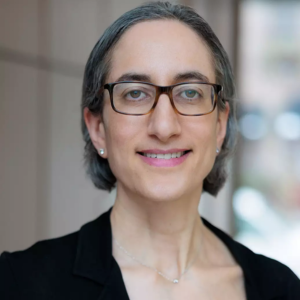
Serena Mayeri – University of Pennsylvania Law School
Marital Privilege: Marriage, Inequality, and the Transformation of American Law (Yale University Press, 2025)
Serena Mayeri’s Marital Privilege shows how, beginning in the 1960s, marriage was dislodged from its supreme position across a range of legal domains and replaced with a regime of “marital privilege.” With poignant, empathetic detail drawn from archives and legal documents, Mayeri brings to life both well-known and not-so-famous cases, revealing the theories and evolving strategies animating a wide range of challengers to the regime of marital supremacy—from litigants to advocacy organizations to legal academics. Yet, even as their victories advanced the values of nondiscrimination and individual autonomy, Mayeri shows how the assumptions of the new regime of “marital privilege” obscured and deepened inequalities of wealth, power, and privilege in American law and society. Combining sweeping ambition, doctrinal acumen, and a keen sense of historical contingency, Marital Privilege provides a magisterial account of a crucial transformation of American law.
Past Winners
Year
Individual(s)
Affiliation
Book
2025
Allison Powers
University of Wisconsin-Madison
Arbitrating Empire: United States Expansion and the Transformation of International Law (Oxford University Press, 2024)
2024
Dylan C. Penningroth
Berkeley Law School
Before the Movement: The Hidden History of Black Civil Rights (Liverwright, WW Norton, 2023)
Honorable Mention
Janet Weston
London School of Hygiene and Tropical Medicine
Looking After Miss Alexander: Care, Mental Capacity, and the Court of Protection in Mid-Twentieth-Century England (McGill-Queen's University Press, 2023)
2023
Jessica M Marglin
University of Southern California
The Shamama Case: Contesting Citizenship Across the Modern Mediterranean (Princeton University Press, 2022)
Honorable Mention
Robert Travers
Cornell University
Empires of Complaints: Mughal Law and the Making of British India, 1765-93 (Cambridge University Press, 2022)
2022
Gregory Ablavsky
Stanford University
Federal Ground: Governing Property and Violence in the First U.S. Territories (Oxford University Press, 2021)
Honorable Mention
Nada Moumtaz
University of Toronto
God’s Property: Islam, Charity and the Modern State (University of California Press, 2021)
2021
Samuel Fury Childs Daly
Duke University
A History of the Republic of Biafra: Law, Crime, and the Nigerian Civil War (Cambridge University Press, 2020)
Honorable Mention
Durba Mitra
Harvard University
Indian Sex Life: Sexuality and the Origins of Modern Social Thought (Princeton University Press, 2020))
2020
Leor Halevi
Vanderbilt University
Modern Things on Trial: Islam’s Global and Material Reformation in the Age of Rida 1865-1935 (Columbia University Press, 2019)
Honorable Mention
Sarah Seo
University of Iowa
Policing the Open Road (Harvard University Press, 2019)
2019
Rohit De
Yale University
A People’s Constitution: The Everyday Life of Law in the Indian Republic (Princeton University Press)
Kimberly M. Welch
Vanderbilt University
Black Litigants in Antebellum America (UNC Press)
2018
Fahad Ahmad Bishara
Cambridge University Press 2017
A Sea of Debt: Law and Economic Life in the Western Indian Ocean Cambridge A Sea of Debt: Law and Economic Life in the Western Indian Ocean Cambridge
2017
Heather Thompson
University of Michigan
Blood in the Water: The Attica Prison Uprising of 1971 and Its Legacy Pantheon Books, 2016
2016
Felice Batlan
Illinois Institute of Technology, Chicago-Kent College of Law
Women and Justice for the Poor: A History of Legal Aid, 1863–1945 Cambridge University Press 2015
2015
Mitra Sharafi
University of Wisconsin
Law and Identity in Colonial South Asia: Parsi Legal Culture, 1772–1947 Cambridge University Press, 2014
2014
Nicholas Parrillo
Yale Law School
Against the Profit Motive: The Salary Revolution in American Government, 1780-1940 Yale University Press 2013
2013
John Witt
Yale University
Lincoln’s Code: The Laws of War in American History The Free Press
2012
Amy Chazkel
Laws of Chance: Brazil’s Clandestine Lottery and the Making of Urban Public Life, Duke University Press
Daniel J. Sharfstein
The Invisible Line: Three American Families and the Secret Journey From Black to White, Penguin Press
2011
Inga Markovits
Justice in Luritz: Experiencing Socialist Law in East Germany, Princeton University Press
Christopher Tomlins
Freedom Bound: Law, Labor, and Civic Identity in Colonizing English America, 1580-1865, Cambridge University Press
2010
Peggy Pascoe
What Comes Naturally: Miscegenation Law and the Making of Race in America, Oxford University Press
2009
James A. Brundage
The Medieval Origins of the Legal Profession: Canonists, Civilians, and Courts, University of Chicago Press
Ariela J. Gross
What Blood Won't Tell: A History of Race on Trial in America, Harvard University Press
2008
Risa L. Goluboff
The Lost Promise of Civil Rights, Harvard University Press
Mary Dewhurst Lewis
The Boundaries of the Republic: Migrant Rights and the Limits of Universalism in France, 1918 1940, Stanford University Press
2007
Nancy McLean
Freedom Is Not Enough, The Opening Up of the American Workplace, Harvard University Press
2006
Holly Brewer
By Birth or Consent: Children, Law, and the Anglo-American Revolution in Authority, Published for the Omohundro Institute of Early American History and Culture, Williamsburg, Virginia, by the University of North Carolina Press
2005
John Fabian Witt
The Accidental Republic: Crippled Workingmen, Destitute Widows, and the Remaking of American Law Harvard University Press, 2004
2004
Bruce H. Mann
Republic of Debtors: Bankruptcy in the Age of American Independence, Harvard University Press
Daniel Lord Smail
The Consumption of Justice: Emotions, Publicity, and Legal Culture in Marseille, 1264-1423, Cornell University Press
2003
Lauren Benton
Law and Colonial Cultures, Cambridge University Press
2002
Sally Engle Merry
Colonizing Hawai'i: The Cultural Power of Law, Princeton University Press
2000
Victoria Saker Woeste
The Farmer's Benevolent Trust: Law and Agricultural Cooperation in Industrial America, 1865-1945, University of North Carolina Press
1998
Leslie J. Reagan
When Abortion Was a Crime: Women, Medicine and Law in the United States, 1867-1973, University of California Press
1996
Marianne Constable
The Law of the Other: The Mixed Jury and the Changing Conceptions of Citizenship, Law and Knowledge, University of Chicago Press
1994
Christopher L. Tomlins
Law, Labor, and Ideology in the Early American Republic, Cambridge University Press
1992
Theodore L. Steinberg
Nature Incorporated: Industrialization and the Waters of New England, Cambridge University Press
Constance B. Backhouse
Petticoats and Prejudice: Woman and Law in Nineteenth Century Canada, Osgoode Society of Women's Press
1990
Martin J. Sklar
Corporate Reconstruction of American Capitalism, 1890-1916, Cambridge University Press
G. Edward White
The Marshall Court and Cultural Change, 1815-35, MacMillan Press
1988
David Langum
Law and Community on the Mexican-California Frontier, University of Oklahoma Press
Arthur McEvoy
The Fisherman's Problem, Cambridge University Press
1986
Edward Ayers
Vengeance and Justice, Oxford University Press
Richard Ferguson
Law and Letters in American Culture, Harvard University Press
1984
Peter H. Irons
New Deal Lawyers, Princeton University Press
1982
Lawrence Friedman and Robert Percival
The Roots of Justice : Crime and Punishment in Alameda County, California, 1870-1910. University of North Carolina Press
1980
Joseph H. Smith and Julius H. Goebel
The Law Practice of Alexander Hamilton: Documents and Commentary. Columbia University Press
Nominations Require:
- Nominators must be current LSA members.
- Books must be published in English, or be English translations of original works.
- Books submitted must have a copyright date (regardless of actual publication dates) during the calendar year prior to the award ceremony.
- Only one single-authored work by the same author in a given year will be accepted. Two works by the same author will be accepted if one or both works are jointly authored.
- Self-nominations are accepted.
- Copies of the book are required to be sent directly to the J. Willard Hurst Book Prize Committee Members. We will reach out to the publishers of the nominated books and provide them with the addresses for the prize committees directly.
- Page proofs may be sent if the book will be published soon with the proper year’s date.
- OPTIONAL – A letter of support from the nominator, including a synopsis of the book.
All supporting documents must be submitted in English and be in .DOC, .RTF, or .PDF format.
PRIZE
Article Prize
The Law and Society Association Article Prize recognizes exceptional scholarship in socio-legal studies for a journal article or chapter in an edited book. Articles may be published in any scholarly journal, including socio-legal journals, journals in other disciplines, and law reviews. Self-nominations are accepted.
The competition is open to all forms of law and society scholarship, to authors at any stage of their careers, and to authors from any country of origin.
The award carries a cash prize of $500.
Current Winner

Gillian Slee – University of Georgia
“Home but Not Free: Rule-Breaking, Withdrawal, and Dignity in Reentry” Criminology, 63, 437–471.
Drawing on more than two years of ethnographic field work with people under community supervision in Philadelphia, Gillian Slee’s article, “Home but not free: Rule-breaking, withdrawal, and dignity in reentry,” documents and analyzes the mismatch between the asserted rehabilitative aims of state supervision of reentry and the experiences of formerly incarcerated people. This is an ambitious empirical study of how the breakdown of personal dignity contributes to people’s violations of parole conditions and withdrawal from supportive services. Describing people’s frustrating efforts to use the state housing assistance program, for example, Slee reveals that the program is unresponsive to people’s financial and emotional constraints. Slee theorizes that this “unrecognized vulnerability,” a concept she develops across multiple examples, leads people to withdraw from the much-needed assistance. Moreover, Slee shows, the substantial discretion of program administrators, along with the manifold and byzantine rules, amount to threats to participants’ dignity and severe limits on their participation in social and kin networks, which leads to rule-breaking, resignation, resistance, and withdrawal. The paper concludes with several concrete suggestions for institutional redesign to empower more humane and effective systems. This article is empirically rich, theoretically significant, and highly readable.
Past Winners
Year
Individual(s)
Affiliation
Article
2025
Mirian G. Martinez-Aranda
University of California, Irvine
Precarious Legal Patchworking: Detained Immigrants’ Access to Justice. Social Problems, 72(1), 191–206
Honorable Mention
Yuvraj Joshi
Brooklyn Law School
Racial Time. The University of Chicago Law Review, 90(6)
2024
Bernadette Atuahene
University of Southern California Gould School of Law
A Theory of Stategraft (New York Law Review, 2023)
2024
Ari Ezra Waldman
University of California, Irvine - School of Law
Gender Data in the Automated Administrative State (Columbia Law Review, 2023)
2023
Fabio de Sa e Silva
University of Oklahoma
Relational legal consciousness and anticorruption: Lava Jato, social media interactions, and the co-production of law’s detraction in Brazil (2017–2019) (Law & Society Review, 2021).
Emily Ryo, Ian G Peacock
USC Gould School of Law; University of California, Los Angeles
The Study of Pandemic and Stigma Effects in Removal Proceedings (Journal of Empirical Legal Studies, 2022)
2022
Rachel E López, Terrell Carter, Kempis "Ghani" Songster
Drexel University, Social Justice Activist, Healing Futures Restorative Justice Diversion Program
Redeeming Justice (Northwestern University Law Review).
Honorable Mention
Ya-Wen Lei
Harvard University
Delivering Solidarity: Platform Architecture and Collective Contention in China’s Platform Economy, (American Sociological Review)
2021
Rachel E. Stern & Lawrence J. Liu
University of California-Berkeley & Yale Law School
“The Good Lawyer: State-Led Professional Socialization in Contemporary China,” (Law & Social Inquiry, 2020)
2020
Mitra Sharafi
University of Wisconsin
The Imperial Serologist and Punitive Self-Harm: Bloodstains and Legal Pluralism in British India, in Global Forensic Cultures: Making Fact and Justice in the Modern Era 60 (Ian Burney & Christopher Hamlin eds., 2019).
Honorable Mention
Niina Vuolajarvi
Rutgers University
“Governing in the Name of Caring—the Nordic Model of Prostitution and its Punitive Consequences for Migrants Who Sell Sex” Sexuality Research and Social Policy 16:151-165 (2019)
2019
Michael W Yarbrough
CUNY John Jay College of Criminal Justice & Graduate Center
Very Long Engagements: The Persistent Authority of Bridewealth in a Post-Apartheid South African Community Law and Social Inquiry 43:3 pp 647-677 (2018)
Honorable Mention
Valerie Jenness and Kitty Calavita
University of California, Irvine
“It Depends on the Outcome”: Prisoners, Grievances, and Perceptions of Justice Law & Society Review 52:1 pp41-72 (2018)
2018
Sarah Brayne
University of Texas at Austin
Big Data Surveillance: The Case of Policing, American Sociological Review, 2017, Vol. 82(5) 977–1008
Honorable Mention
Hidetaka Hirota
City University of New York-City College
Exclusion on the Ground: Racism, Official Discretion, and the Quotidian Enforcement of General Immigration Law in the Pacific Northwest Borderland,” 2017, American Quarterly, Volume 69, Number 2, June 2017, pp. 347-370
2017
Forrest Stuart
University of Chicago
Becoming Copwise: Policing, Culture, and the Collateral Consequences of Street Level Criminalization, Law & Society Review 50(2) (2016): 279-313
2016
Ashley T. Rubin
University of Toronto
Law & Society Review 2015
2015
Kathryne Young
Stanford University
Everyone Knows the Game: Legal Consciousness in the Hawaiian Cockfight Law & Society Review, 2014
2014
Issa Kohler-Hausmann
New York University
Managerial Justice and Mass Misdemeanor published in the September 2013 volume of The American Journal of Sociology
2013
Alexandra Natapoff
Loyola Law School, Los Angeles
Misdemeanors, Southern California Law Review 85: 1313-1375
2012
Lauren B. Edelman, Linda H. Krieger, Scott R. Eliason, Catherine Albiston, and Virginia Mellema
“When Organizations Rule: Judicial Deference to Institutionalized Employment Structures” American Journal of Sociology 117: 888-954 (2011)
2011
Joseph A. Conti
“Learning to Dispute: Repeat Participation, Expertise, and Reputation at the World Trade Organization” Law & Social Inquiry 35:1, 625-62 (2010)
2010
Anders Walker
“The Violent Bear It Away: Emmett Till and the Modernization of Law Enforcement in Mississippi” 46 San Diego Law Review 459, 2009
2009
Terence C. Halliday and Bruce G. Carruthers
“The Recursivity of Law: Global Norm Making and National Lawmaking in the Globalization of Corporate Insolvency Regimes" American Journal of Sociology 112(January): 1135-1202 (2007)
John Hagan, Gabrielle Ferrales, and Guillermina Jasso
"How Law Rules: Torture, Terror, and the Normative Judgments of Iraqi Judges," Law & Society Review 42(3): 605-643 (2008)
2008
James J. Willis, Stephen D. Mastrofski, and David Weisburd
“Making Sense of COMPSTAT: A Theory‑Based Analysis of Organizational Change in Three Police Departments” Law and Society Review 41(1): 147‑188 (2007)
2007
Eric Feldman
“The Tuna Court: Law and Norms in the World’s Premier Fish Market” California Law Review 94: 313-69. (2007)
2006
Joachim J. Savelsberg and Ryan D. King
"Institutionalizing Collective Memories of Hate: Law and Law Enforcement in Germany and the United States" American Journal of Sociology, 111, 2 (2005) 579-616.
2005
Lucy E. Salyer
"Baptism by Fire: Race, Military Service, and U.S. Citizenship Policy, 1918B1935" The Journal of American History, Vol. 91, No. 3, December 2004: 847 876
2004
Paul Frymer
"Acting When Elected Officials Won't: Federal Courts and Civil Rights Enforcements in U.S. Labor Unions, 1935-95," 97(3) American Political Science Review, 1-17 (2003)
2003
Susan Bibler Coutin, Bill Maurer, and Barbara Yngvesson
"In the Mirror: The Legitimation Work of Globalization," 27 Law & Social Inquiry, 801 (2002)
2002
James Liebman
"The Overproduction of Death," Columbia Law Review 100 (2000) 2030-2156
Laura Beth Nielsen
"Situating Legal Consciousness: Experiences and Attitudes of Ordinary Citizens about Law and Street Harassment, Law & Society Review, (2000), 1055-1090
2001
Scott Phillips and Ryken Grattett
"Judicial Rhetoric: Meaning Making and the Institutionalization of Hate Crime Law," 34 Law & Society Review 567-606
2000
Mary Vogel, Bruce Western and Katherine Becket
"The Social Origins of Plea Bargaining: Conflict and the Law in the Process of State Formation, 1830-1860," 33 Law & Society Review 161-246"How Unregulated Is the U.S. Labor Market? The Penal System as a Labor Market Institution," 104 American Journal of Sociology, 1030-1060.
1999
Gregory C. Sisk, Michael Heise, and Andrew P. Morriss
"Charting the Influence of the Judicial Mind" New York University Law Review, 73(5):1377-1499
1998
David M. Engel and Frank W. Munger
"Rights, Remembrance, and the Reconciliation of Difference" Law & Society Review 30:1, pp 7-54
Nominations Require:
- Nominators must be current LSA members.
- Article copies submitted to the committee must be in English.
- Only one single-authored work by the same author in a given year will be accepted. Two works by the same author will be accepted if one or both works are jointly authored.
- The article must have a publication date within the two calendar years prior to the awards ceremony. Articles will only be considered once within the two-year period of eligibility.
- The full article, including full bibliographic citation.
- OPTIONAL – A letter of support from the nominator, including an abstract of the article.
All supporting documents must be submitted in English and be in .DOC, .RTF, or .PDF format.
PRIZE
John Hope Franklin Prize
The John Hope Franklin Prize is awarded annually by the Law and Society Association to recognize exceptional scholarship in the field of Race, Racism and the Law.
The Franklin Prize is awarded for an article published in the two calendar years prior to the award year. The competition is open to all forms of law and society scholarship, to authors at any stage of their careers, and to authors from any country of origin. Articles may be published in any scholarly journal, including socio-legal journals, journals in other disciplines, and law reviews, or may be a chapter in a book volume. Co-authored articles, and self-nominations, may be submitted for consideration.
While there is no limit on the number of articles one may nominate, an article may not be considered for the John Hope Franklin Prize and another LSA award. The decision in determining whether an article should be submitted for consideration for the Franklin Prize, rather than another LSA award, rests with the article’s nominator in consultation with the author.
The award carries a cash prize of $500.
Current Winner

Alice Abrokwa – University of Virginia School of Law
“Too Stubborn to Care for: The Impacts of Discrimination on Patient Noncompliance” Vanderbilt Law Review, 77(2), 461
Patient noncompliance is an enduring problem in clinical medicine, and researchers have documented both its prevalence as well as the disproportionate application of this label to racial minorities. Being characterized as noncompliant can have significant impacts on patients’ continued access to health care, which can further aggravate racial disparities in health. As Abrokwa notes, “the perception of noncompliance, as well as a patient’s actual noncompliance, becomes reason to not treat Black people’s pain seriously or at all.” (466) In “Too Stubborn to Care For: The Impacts of Discrimination on Patient Noncompliance,” Professor Abrokwa offers a brilliant intervention that highlights how patient noncompliance is often produced by medical providers rather than just the way some patients are. By drawing upon frameworks from disability rights to critical race theory, she develops a new approach that moves medicine away from treating compliance as an individual choice and towards an understanding that sees it as an interaction between patients, institutions, and practitioners. This creates new opportunities for reducing disparities and making health care more accessible.
Past Winners
Year
Individual(s)
Affiliation
Publication
2025
Jasmine E. Harris
University of Pennsylvania
"The Political Economy of Conservatorship." UCLA Law Review, 71(5), 1364-1482
Daniel S. Harawa
New York University
"Coloring in the Fourth Amendment." Harvard Law Review, 137(6), 1533-1582
Honorable Mention
Giuliana Perrone
University of California, Santa Barbara
"Rehearsals for Reparations." The Russell Sage Foundation Journal of the Social Sciences, 10(2), 132-150
2024
I. India Thusi
Indiana University, Bloomington
"The Racialized History of Vice Policing"
2024
katrina quisumbing king
Northwestern University
"The Structural Sources of Ambiguity in the Modern State: Race, Empire, and Conflicts over Membership"
2023
Devon W Carbado
University of California, Los Angeles
“Strict Scrutiny and the Black Body”
2022
Frank Edwards & Theresa Rocha Beardall
Rutgers University & University of Washington
“Abolition, Settler Colonialism, and the Persistent Threat of Indian Child Welfare"
Honorable Mention
Robin Walker Sterling
Northwestern Pritzker School of Law
“Through a Glass, Darkly: Systemic Racism, Affirmative Action, and Disproportionate Minority Contact,” 120 Mich. L. Rev. 451 (2021).
2021
Kara W. Swanson
Northeastern University
“Race and Selective Legal Memory: Reflections on Invention of a Slave”
Honorable Mention
I. India Thusi
Delaware Law School
“On Beauty and Policing,” 114 Northwestern University L.Rev. 1335 (2020)
Honorable Mention
Deborah N. Archer
NYU School of Law
“White Men’s Roads through Black Men’s Homes: Advancing Racial Equity through Highway Construction” 73 Vanderbilt L. Rev. 1259 (2020)
2020
Bernadette Atuahene
Chicago-Kent College of Law
Bernadette Atuahene. "Predatory Cities" California Law Review Vol. 108 Iss. 1 (2020) p. 107 - 182 ISSN: 0008-1221 Available at: http://works.bepress.com/bernadette_atuahene/52/
Honorable Mention
Michele Goodwin
University of California-Irvine
“The Thirteenth Amendment: Modern Slavery, Capitalism, and Mass Incarceration” 104 Cornell Law Review 899 (2019)
Honorable Mention
César Cuauhtémoc García Hernández
University of Denver Sturm
“Deconstructing Crimmigration” 52 UC Davis Law Review 197 (2018-2019)
2019
Kimani Paul-Emile
Fordham University School of Law
Blackness as Disability?
2018
Angela Onwuachi-Willig
University of California at Berkeley
Policing the Boundaries of Whiteness: The Tragedy of Being ‘Out of Place’ from Emmett Till to Trayvon Martin
2017
Matthew Clair and Alix S.Winter
Harvard University
How Judges Think About Racial Disparities: Situational Decision-Making in the Criminal Justice System Criminology 54 (2):332-359 Nominated by Lawrence D. Bobo, Harvard University
2016
Len Albright, Douglas S. Massey, Jacob S. Rugh
Northeastern University, Princeton University, Brigham Young University
Race, Space, and Cumulative Disadvantage: A Case Study of the Subprime Lending Collapse May 2015 issue of Social Problems (Volume 62, Issue 2, Pages 186-218)
2015
D. Wendy Greene
Samford University-Cumberland School of Law
Categorically Black, White, or Wrong: ‘Misperception Discrimination’ and the State of Title VII Protection, University of Michigan Journal of Law Reform, 2013
2014
Matthew Desmond
Sociology and Social Studies, Harvard University
Eviction and the Reproduction of Urban Poverty American Journal of Sociology 118 (2012): 88-133
2013
Ada Ferrer
New York University
Haiti, Free Soil, and Antislavery in the Revolutionary Atlantic 117 American Historical Review 40 (2012)
2012
Elise C. Boddie
"Racial Territoriality"” 58 U.C.L.A. L. Rev. 401 (2010)
2011
Osagie K. Obasogie
In “Do Blind People See Race? Social, Legal and Theoretical Considerations,” 44 L. & SOC. REV. 585 (2010)
Nominations Require:
- Nominators must be current LSA members.
- Article copies submitted to the committee must be in English.
- The article must have a publication date within the two calendar years prior to the awards ceremony. Articles will be considered only once during the two-year period of eligibility.
- Only one single-authored work by the same author in a given year will be accepted. Two works by the same author will be accepted if one or both works are jointly authored.
- The full article, including full bibliographic citation.
- OPTIONAL – A letter of support from the nominator, including an abstract of the article.
All supporting documents must be submitted in English and be in .DOC, .RTF, or .PDF format.
PRIZE
Dissertation Prize
The LSA Dissertation Prize is awarded annually to a dissertation written within 12 months of the prize year that best represents outstanding law and society scholarship.
The award carries a cash prize of $500.
Current Winners

Dr. Shruti Iyer – University of Cambridge
“Silicosis and the State: Valuing Life and Labour in Contemporary India”
The dissertation examines how silicosis, an incurable lung disease caused by prolonged exposure to silica dust, has become a site of political struggle involving workers, activists, and the state. Building on uniquely rich ethnographic work in Rajasthan, India, this research shows that, while the state designed silicosis compensation primarily as a humanitarian response to suffering—translating injury into monetary compensation through bureaucratic procedures, workers and activists reinterpret and mobilize these programs for broader political ends. The study shows that welfare institutions function not only as mechanisms of bureaucratic governance, but also as arenas where political claims, solidarities, and reinterpretations of state responsibility emerge.
The committee uniformly noted that this dissertation presented a vivid, engaging, and beautiful ethnography of a case and setting that were both unique and carefully connected to broader contexts and theories across a surprising breadth of disciplines and subject areas. The committee appreciated the dissertation’s intensive and rigorous methods, including both a detailed analysis of the legal development of the Indian government’s policy establishing a silicosis welfare scheme, as well as an intensive observation of the implementation of this policy on the ground, as negotiated by laborers, patients, doctors, and unions. In particular, we appreciated not only the author’s interdisciplinary engagement with literature from tort and labor law to medicine and public health to theories of welfare state action, but also their engagement with how differently-situated individuals make moral and political meaning of the law. Throughout, the author centered the agency of unexpected actors from factory laborers to terminally ill patients and their families. Not only does this dissertation analyze an impressive scale of empirical data, and interweave interdisciplinary perspectives on law, but the author also engages thoughtfully and transparently with their own challenges – from an initial interest in tort law that shifted with the investigation of the silicosis welfare policies to the class contrasts (and associated ethical dilemmas) inherent in being an elite urban researcher in rural working class settings.
In sum, by tracing silicosis across bureaucratic procedures, legal claims, and activist campaigns, this work shows how welfare programs can simultaneously individualize suffering and enable collective political mobilization.
Honorable Mention

Meghan Maree Ballard- RAND Corporation
“Language Access in State Courts: The Bureaucratic Interpretation, Organizational Construction, and Local Implementation of Title VI of the Civil Rights Act of 1964”
Although Title VI of the U.S. Civil Rights Act of 1964 prohibits national origin discrimination, it does not explicitly address language. Courts and agencies have nevertheless interpreted it to encompass language discrimination, creating a framework for language access. In practice, however, implementation remains uneven: many courts limit or inconsistently provide interpretation services. Ballard’s dissertation investigates how ambiguity in the administrative enforcement of civil rights law creates space for variation in how institutions interpret and implement these obligations, resulting in unequal access to justice for individuals with limited English proficiency (LEP). This methodologically ambitious dissertation traces the interpretation of “meaningful language access” across federal interpretation, state organizational construction, and local implementation. By tracing this policy-to-practice pathway of language access, Ballard reveals how language rights are constructed through interactions among federal agencies, courts, and local actors. The dissertation’s crisply written prose and rigorous approach help to showcase both how important language access is and the myriad social forces that undermine its provision. Ultimately, the study demonstrates that, while language access is central to dignity and equality, it often settles into what Ballard terms “good enough” implementation.
By linking the study of immigration, civil rights enforcement, and court administration, the dissertation offers a significant contribution to law and society scholarship. It reveals how civil rights law travels across institutional levels and gets reshaped in practice.
Honorable Mention
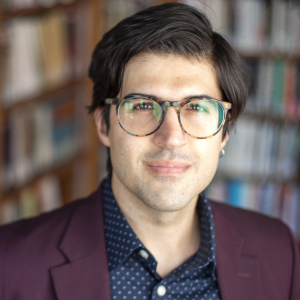
Ed Cornelius – University of Minnesota
“Car Wash Legacies: Lawyers, Globalization, and the Restructuring of the Brazilian Penal Field”
This impressive work draws on Bourdieusian theory to analyze the key roles of lawyers and law in penal change within Brazil’s anti-corruption campaign, known as “Operation Car Wash.” Drawing on extensive qualitative research, the dissertation examines how the legal legacy of this anticorruption investigation, which initially targeted powerful political and business elites, ultimately produced penal reforms that disproportionately affected marginalized defendants, rather than elites. Cornelius’s dissertation argues that this outcome should not be reduced to explanations about partisan politics. Instead, Cornelius’s dissertation suggests that prosecutors and judges sought to “democratize punishment” by importing punitive models from the Global North, but encountered resistance from elite defense lawyers and scholars advocating for a minimalist criminal law grounded in procedural safeguards. The analysis is based on more than a year of fieldwork carried out in Brazil in two different cities (Porto Alegre and Sao Paulo), as well as 116 interviews with prosecutors, defense attorneys, public defenders, professors, and state and federal justices; observations of 27 academic and other events; and a collection of speeches, hearings, legislation, and other documents related to legal reforms.This extensive material enables Cornelius to analyze two legal reforms: “Ten Measures Against Corruption” (2016) and an anti-crime package passed in 2019 and document how penal change emerges from struggles within the legal profession over competing legal ideas, rather than exclusively from legislative incentives.
The committee was impressed with Cornelius’s ability to sketch out major developments within Brazilian legal culture, smartly and effectively contextualizing nation-level processes of penal change within larger processes of the globalization of law. Marked by a confident voice and analytical sharpness, the dissertation is highly polished and unusually cohesive in its development. The resulting text reads much more like a finished book than a dissertation. By bridging the sociology of punishment and law and society scholarship, it offers a clear and original account of how legal actors and expertise shape penal reform.
Past Winners
Year
Individual(s)
Affiliation
Paper
2025
Du Fei
University of Oklahoma
"Local Women, Global Histories? Gendering Economic Life, Law, and Islam in Early Modern Transregional India"
Honorable Mention
Faith M. Deckard
University of California, Los Angeles
"Bonded: Bail Agents, Families, and the Management of Risk"
2024
Dr. Inbar Peled
Osgoode Hall Law School - York University
“Professionalizing Discrimination: Legal Actors and The Struggle against Racialized Policing in Multicultural Societies”
Honorable Mention
Victoria Piehowski
SUNY Buffalo
"The Politics of Trauma: Establishing and Expanding Veterans Treatment Courts in Minnesota"
2023
Dylan Farrell-Bryan
University of Pennsylvania
"Bureaucracies of Removal: The Labor and Logics of US Immigration Courts"
Honorable Mention
Erdem Demirtaş
Bogazici University, Istanbul, Turkey
"Constitutional Courts During Political Upheavals: The Case of the Turkish Constitutional Court"
2022
Stephen Schaaf
University of Mississippi
"Litigating the Authoritarian State: Legal Mobilization and Judicial Politics in the Middle East”
2021
Tobias Smith
University of California-Berkeley
“The Contradictions of Chinese Capital Punishment”
Edward van Daalen
University of Genève
“Decolonizing the Global Child Labor Regime: The ILO, Trade Unions, and Organized Working Children”
2020
Emily Prifogle
University of Michigan
“Cows, Cars, and Criminals: The Legal Landscape of the Rural Midwest, 1920-1975”
Tommaso Pavone
PluriCourts Centre at the University of Oslo
“The Ghostwriters: Lawyers and the Politics behind the Judicial Construction of Europe”
Honorable Mention
Michael Gibson-Light
University of Denver
“The Prison as Market: How Penal Labor Systems Reproduce Inequality”
2019
Egor Lazarev
University of Toronto
Laws in Conflict: Legacies of War and Legal Pluralism in Chechnya Honorable Mention
Honorable Mention
Viviane Weitzner
McGill University
Raw Economy/Raw Law: Ancestral Peoples, Mining, Law and Violence in Colombia
2018
Amanda Hughett
Baldy Center for Law & Social Policy, SUNY-Buffalo
Silencing the Cell Block: The Making of Modern Prison Policy in North Carolina and the Nation
2017
Sarah Seo
Princeton University
The Fourth Amendment, Cars, and Freedom in Twentieth Century America
2016
Sandra Botero Cabrera
University of Notre Dame
Courts that Matter: Judges, Litigants and the Politics of Rights Enforcement in Latin America
2015
Gwendolyn Leachman
University of Wisconsin
Institutions and Dominance within Social Movements: How Legal Strategies Shape the Agendas of Movements for Social Change, Jurisprudence and Social Policy, University of California, Berkeley
2014
Hillary Berk
Jurisprudence and Social Policy, University of California, Berkeley
The Legalization of Emotion: Risk, Gender, and the Management of Feeling in Contracts for Surrogate Labor
Rohit De
Department of History, Princeton University
The Republic of Writs: Litigious Citizens, Constitutional Law, and Everyday Life in India (1947-1964)
2013
Benjamin Schonthal
Ruling Religion: Buddhism, Politics and Law in Contemporary Sri Lanka University of Chicago
2012
John W. Compton
A Moral Revolution: Evangelical Reform and the Transformation of American Constitutionalism, 1830‐1937, University of California at Los Angeles
2011
Chaitanya Lakkimsetti
Governing Sexualities: Globalization, Biopower, And Citizenship in Postcolonial India, University of Wisconsin, Madison
2010
Heather Schoenfeld
The Politics of Prison Growth: From Chain Gangs to Work Release Centers and Supermax Prisons, Florida, 1955-2000, Northwestern University
2009
Ceren Belge
Whose Law?: Clans, Honor Killings, and State-Minority Relations in Turkey and Israel, University of Washington Who Rules the Law?
Mark Fathi Massoud
How Government, Civil Society, and Aid Agencies Manipulate Law in Sudan, University of California, Berkeley
2008
Manuel A. Gómez
All in the Family: The Influence of Social Networks on Dispute Processing, Stanford University
2007
Sandra R. Levitsky
Private Dilemmas of Public Provision: The Formation of Political Demand for State Entitlements to Long-Term Care, University of Wisconsin
2006
Naomi Murakawa
Electing to Punish: Congress, Race, and the American Criminal Justice State, Yale University
2005
Margot Canaday
The Straight State: Sexuality and American Citizenship, 1900 1969, University of Minnesota
2004
Risa L. Goluboff
The Work of Civil Rights in the 1940s: The Department of Justice, the NAACP, and African American Agricultural Labor, Princeton University
2003
Katharina Heyer
Rights on the Road: Disability Politics in Japan and Germany, University of Hawaii
Barbara Oomen
Chiefs! Law, Power and Culture in Contemporary South Africa, University of Leiden
2002
Catherine Ruth Albiston
The Institutional Context of Civil Rights: Mobilizing the Family and Medical Leave Act in the Courts and in the Workplace, University of California, Berkeley
2001
Sara Manaugh
Without Reason: Drug War Politics in the United States, University of California, Berkeley
2000
Laura Beth Nielson
License to Harass: Offensive Speech, Legal Consciousness, and Hierarchies of Race, Gender, and Class, University of California, Berkeley
1999
Beth Kiyoko Jamieson
Toward a Feminist Theory of Liberty, Rutgers University
Nominations Require:
- Nominators must be current LSA members
- The dissertation must have been filed with the institution of higher education (U.S or non-U.S) during the calendar year prior to the award ceremony.
- The full dissertation in English; translations from other languages into English are welcome.
- An abstract of the dissertation, also in English.
- OPTIONAL – One letter of nomination from a regular member of the Law and Society Association.
- No self-nominations or student-member nominations are accepted.
All supporting documents must be submitted in English and be in .DOC, .RTF, or .PDF format.
PRIZE
Graduate Student Paper Prize
The LSA Graduate Student Paper Prizes are awarded annually to a graduate student whose nominated papers, written within 18 months of the prize year, best represent outstanding law and society research.
The award carries a cash prize of $500.
Current Winner

Juhwan Seo – Rutgers University
“Not the ‘Love Police’? How Lawyers Shape Immigrant Families”
Juhwan Seo has been selected as the winner of this year’s graduate student paper award. Seo’s well-written, thoughtfully developed, and timely paper examines the role of attorneys who guide mixed-status couples applying for marriage-based green card and naturalization petitions. Drawing on 36 in-depth interviews with immigration attorneys, paralegals, and nonprofit advocates, Seo observes the ways that legal professionals shape intimate dimensions of couples’ everyday lives so that they may be seen as “respectable” by the state. Attorneys translate immigration law into personalized checklists that serve as a kind of blueprint for marriage that couples must follow. Legal professionals instruct and correct family behaviors, they ensure they are routinized and documented–all to ensure that mixed-status couples conform to White, heteronormative, middle-class nuclear family norms. Seo expands on theories of social control, nonstate governance and lawyering to document the critical role that legal professionals play in coercing subjects toward American acculturation.
Past Winners
Year
Individual(s)
Affiliation
Paper
2025
Iolanthe Brooks
Northwestern University
"Shuffling Within the System: The Pervasive Uncertainty of Prison Transfers"
Roberta S. Pamplona
University of Toronto
"Reframing Feminist Ideas, Challenging State Incorporation: Activism Against Violence and the Feminicidio Law in Brazil"
2024
Kris Rosentel
Northwestern Sociology
"'Beyond “Walking While Trans:' Transgender Discrimination, Gendered Spatial Stigma, and Biased Police Deployment in Sex Work Arrests"
2023
Charlotte Rosen
Northwestern University
“Harris v. Philadelphia and the Dilemma of Mass Imprisonment in Law and Order Philadelphia, 1986-2000”
Victoria Piehowski
University of Minnesota
“ 'We Broke ‘em, We Fix ‘em:' Trauma Discourse, Veterans Treatment Courts, and the Politics of Crime”
2021
Nafay Choudhury
Harvard Law School & University of Cambridge
“Order in the Bazaar: The Transformation of Nonstate Law in Afghanistan’s Premier Money Exchange Market”
2020
Tony Cheng
Yale University
“Social Media and Shaping the Social Memory of Police (Mis)Conduct"
2019
Stefan Vogler
University of California, Irvine
Constituting the ‘Sexually Violent Predator’: Law, Forensic Psychology, and the Adjudication of Risk
2018
Ayobami Laniyonu
UCLA
Coffee Shops and Street Stops: Policing Practices in Gentrifying Neighborhoods
2017
Erin Adam
University of Washington
Intersectional Coalitions: The Paradoxes of Rights-Based Movement Building in LGBTQ and Immigrant Communities
2016
Ayako Hirata
Kyoto University
Regulation In-Between: How Does Inter-Office Interaction Matter for Street-Level Regulatory Enforcement?
2015
Hassan Abdel Salam
New York University
"The Great Reversal"
2014
Issa Kohler-Hausmann
New York University
Misdemeanor Justice: Control without Conviction
2013
Amy Myrick
Northwestern University
Facing Your Criminal Record: Expungement and the Collateral Problem of Wrongfully Represented Self
2012
Ben Grunwald
University of Pennsylvania
Questioning Blackmun's Thesis: Does Uniformity in Sentencing Entail Unfairness?
2011
Shauhin A. Talesh
University of California, Berkeley
How Organizations Shape the Meaning of Law: A Comparative Analysis of Dispute Resolution Structures and Consumer Lemon Laws
2010
Ashley T. Rubin
University of California, Berkeley
Race, Ethnicity, and Nativity at Eastern State Penitentiary: A Study of the Variation in Sentence Length, 1829-1871
2009
Gwendolyn Leachman
University of California, Berkeley
Who Frames the Message? Counter Movements and Public Perception of Social Movements' Legal Agendas
2008
Mark Fathi Massoud
University of California, Berkeley
Myth‑making and the Collision of Rights in Sudan
2007
Philip Goodman
University of California, Irvine
It's Just Black, White or Hispanic": An Ethno- graphic Examination of Racializing Moves in California's Segregated Prison Reception Centers
2006
Ariel Meyerstein
University of California, Berkeley
Between Law and Culture: Rwanda's Gacaca and Postcolonial Legality
Scott Leon
Washington Princeton University
The Killing Fields Revisited: Lynching and Anti- Miscegenation Legislation in the Jim Crow South, 1882-1930
2005
Daniel LaChance
University of Minnesota
Last Words, Last Meals, and Last Stands: The Illusion of Agency in the Modern Execution Process
2004
Bruce Michael Price
New York University
How Green Was My Valley? An Examination of Tournament Theory as a Governance Mechanism in Silicon Valley Law Firms
2003
Vanessa Barker
New York University
The Politics of Punishing: How the Routine Activities of Governance Impact Reliance on Confinement
2002
Aaron Kupchik
New York University
Making Some Noise: Degradation as Tension Reduction for the Criminal Court Prosecution of Adolescents
2001
Brian Glenn
University of Connecticut
The Shifting Rhetoric of Insurance Denial
2000
John Krinsky
Columbia University
Organizing Stories: Counter-hegemony, Legal Advocacy, and Anti-Workforce Activism in New York City
1999
Michele Landis
Northwestern University
Fate,Responsibility, and "Natural" Disaster Relief: Narrating the American Welfare State
1998
Liliana Suarez-Navaz
Stanford University
The Symbolic and Political Manufacturing of the Legitimation of Legality
Laura Beth Nielsen
University of California, Berkeley
Paying Workers or Paying Lawyers: Employee Termination Practices in the United States and Canada
1997
David T. Johnson
University of California, Berkeley
The Organization of Prosecution and the Possibility of Order
1996
Susan S. Gooding
University of Chicago
Race,Place and Names: Layered Identities in United States v. Oregon, Confederated Tribes of the Colville Reservation, Plaintiff-Intervenor
1995
Cynthia R. Poe
University of Wisconsin
Those Wondrous Structures Found: The Antiquities Act of 1906 and Federal Indian Policy
1994
Paul J. Neiberg
University of California, Berkeley
Endangered Species Protection in the United States and Canada: A Comparison of Policy Styles
1993
Avi Tannenbaum
University of Maryland
Deadly Force: The Influence of a Supreme Court Decision on Police Behavior
1992
Michele DeMary
University of Massachusetts, Amherst
The New Federalism in Massachusetts
1991
John Gilliom
University of Washington
Rights and Discipline: competing Modes of Social Control in the Fight over Drug Testing
1990
Rebecca Eisner uth Zimmerman
University of Michigan
Individual Entitlement to the Financial Benefits of a Professional Degree
Tom Durkin
University of Chicago
The Meaning of Propensity to Sue Rates
1989
Kevin Delaney
SUNY Stony Brook
Power, Intercorporate Networks and ‘Strategic Bankruptcy’
Jennifer Jackman
Brandeis University
The Emergence and Subversion of Comparable Worth in the 1940's: A Study of the Massachusetts Equal Pay Act
Nominations Require:
- Only non-student members of the Law and Society Association may make nominations for the Graduate Student Award. No self-nominations are accepted.
- The paper must have been submitted within the two calendar years prior to the awards ceremony by a matriculated graduate or graduate professional student at any U.S. or non-U.S. institution of higher education. Papers originally written for coursework within this same time period and subsequently published are still eligible for nomination. Papers are only considered once within the two-year period of eligibility.
- No instructor may nominate more than two student papers for the award.
- Only one single-authored work by the same author in a given year will be accepted. Two works by the same author will be accepted if one or both works are jointly authored.
- In submitting the paper for award consideration, the nominator must include the date and title of the course for which the paper was written.
- Submissions must be in English; translations from other languages into English are welcome.
- The paper must be double-spaced; may not exceed 18,000 words in length, including notes and references; and must be in a minimum of 12 point font.
- OPTIONAL – Nominators can include a letter of support describing the merits of the student paper they are submitting.
All supporting documents must be submitted in English and be in .DOC, .RTF, or .PDF format.
PRIZE
Undergraduate Student Paper Prize
The LSA Undergraduate Student Paper Prizes are awarded annually to an undergraduate student whose nominated papers, written within 18 months of the prize year, best represent outstanding law and society research.
The award carries a cash prize of $500.
Current Winner

Levi Garrett Cannon – University of California, Berkeley
“Defining Custody Resolution: How Parent Coordinators Construct Family Law”
Levi Garrett Cannon has been selected as the winner of this year’s undergraduate paper prize. Cannon’s impressive paper explores how parent coordination has emerged over the last four decades as an alternative dispute resolution (ADR) forum for high-conflict custody cases. Based on interviews with parent coordinators in a California county, the author deftly demonstrates how practitioners translate California family law into practice, in a context of vague standards and guidelines that vary across counties. In detailed fashion, Cannon examines the ways that coordinators exercise their considerable discretion, and the way that discretion is shaped by extra-legal factors such as contested psychological scholarship, the positions of professional organizations, and the teachings of popular parent coordination trainings. The result, they provocatively argue, is the potential erosion of the rights of both parents and children.
Past Winners
Year
Individual(s)
Affiliation
Paper
2025
Celia Parry
Pomona College
"Strange Bedfellows: Guardians for Fetuses and Future Generations"
Avani Singh
University of California, Berkeley
"Judicial Insights: Unraveling Mental Health Decisions in Collaborative vs. Traditional Courts"
2024
Sanjana Manjeshwar
University of California, Berkeley
“'Agreements' in Name Only: How Workers Understand Mandatory Arbitration Clauses and Class Action Waivers in Employment Contracts"
2023
Shealyn Massey
University of California, Berkeley
“The Legal Consciousness and Legal Mobilization of Queer Asian Pacific Islanders"
2022
Abbey Hackelman
Purdue University
“Functional Confinement"
2021
Raika Kim
University of California-Berkeley
“The Ability to Work: Perspectives of Workers with Disabilities”
2020
Anthony Carrasco
University of California-Berkeley
“Unconscionability, Vulnerability, and Other Sociopolitical Constructions of the Judicial Imagination”
2019
Catherine Mansur
Northwestern University
All Bets Are off in the Climate Casino: Federalism and U.S. Power Sector Greenhouse Gas Regulation
Honorable Mention
Haley Glazer
Northwestern University
Demographic and Case-Related Factors Affecting Quantity of News Media Coverage in Texas Death Penalty Cases: An Exploration
2018
J. Y. Chua
Yale College
The Strange Career of Gross Indecency: Racial Anxiety and Sexual Politics in Pre-World War II Singapore
Honorable Mention
Melissa Barragan
University of California, Irvine
Guns and Injustice: Examining Gun Offender Perceptions of Gun Law and Gun Policing in Los Angeles
2017
Mitchell Santos Toledo
University of California, Berkeley
Liminal Legality and Legal Consciousness: Undocumented Student Responses to DACA
2016
Allison Cano
Simon Fraser University
A Matter of Personal Status: Women’s Legal Rights and the Making of Family Law in Post-2003 Iraq
2015
Matthew Mitchell
University of Melbourne
Producing Black Collar Crime Through Discourse: The Changing Relationship Between State Law and the Catholic Church
2014
Alison Gocke
Princeton University
Visions of the Land: Cartography and Environmental Philosophy in the Old Northwest
2013
Carter Greenbaum
Princeton University
Stories to Monies: Sociological Perspectives on the Meaning of Money In International Commercial Mediation
2012
Chase S. Burton
University of California, Berkeley
Spare the Cell, Spoil the Child: Early History and Philosophy of American Juvenile Justice
2011
Kory Redding
University of North Texas
When the Chief Dissents: Examining the Institutional Consequences of Administrative Responsibilities, 1946-2008
2010
Erin Mitchell
Drake University
Dangerous, Dirty and Disgusting: An Exploration of the American Narrative of Birth
2009
Clare F. Ryan
Macalester College
Confronting Childhood: Courts and the Contradictions of Juvenile Justice
2008
Patricia Bass
Macalester College
Regulating the ‘Social Mix:’ How and Why Do France and the U.S. Desegregate Housing
2007
Rebecca Sheff
Macalester College
Strategic Choices in Diverse Contexts: The Maasai Indigenous Rights Movement
2006
Ian Richardson
University of California, Berkeley
From Institutional Change to Customer Service: The Development of the Practical Meaning of Title VI
2005
Rachel Lynn, Ballard McCracken
Amherst College
Inside Out and Upside Down in Indian Country: Law's Colonization of the Native Nations
2004
John Graham Kimble
Princeton University
Insuring Inequality: The Role of the Federal Housing Administration in the Urban Ghettoization of African-Americans
2003
Yen P. Nguyen
University of California, Santa Barbara
Creating Computer Crimes Unites to Take a Byte Out of Computer Crime
2002
Matthew Cannon
University of Michigan
Kulturkampf and the Courts: The Relationship between Judicial Pronouncements on and Cultural Impressions of Gay Rights in America, From Bowers to Baker
2001
Rachael Burson
Amherst College
A Tale of Voice, Justice, and Power: Reading the Representation of Legal Storytelling in "The Accused"
2000
Shushanie Isaacson
University of Minnesota
Diffusion of Sex Offender Registration Laws and Public Access Provisions Therein Across Fifty American States
1999
Emily Samantha Glasgow
Amherst College
Taking Children Seriously: Reconceiving Childhood, Imagining Rights, and Respecting the Voice of Youth
1998
Vicki J. Running
Wellesley College
Political Rights and Goals: Ananlying the Consituttional Challenges and Policy Considerations Facing Megan’s Law, the Community Notification Provision Regarding Released Sex Offenders
1997
Clifford J. Rosky
Amherst College
A View to a Kill: Democracy, Television, and Capital Punishment
1996
Alexa Klimas
Princeton University
Why Did We Believe the Children?: A Closer Look at Allegations of Sexual Abuse in Day Care Centers in the 1980's
1995
Clare Melissa Gilbert
Vassar College
Pornography v. the First Amendment
1994
Elizabeth A. Myrick
Bates College
What’s Rights Got to Do With It?: Intimate Violence and the Potential of Postmodern Rights Theory
1992
Marilyn Brown
Wellesley College
The Meanings of Intoxication: Alcohol, Power and Colonialism in Nineteenth-Century Hawaii
1991
John White
Santa Clara University
Styles of Mediation and Society: An Analysis of a ‘Hybrid’ Approach to Mediation
1989
Timothy Pohl
Amherst College
The Right to Health Care: Moral Arguments and Legal Recognition
Sagariki Molly Chaudhuri
Yale University
The Efficacy of the Temporary Restraining Order from the Victim’s Perspective
Nominations Require:
- Only regular LSA members and graduate student LSA members who have received the nominated papers while working as lecturers or teaching assistants may nominate papers for the Undergraduate Student Award. No self-nominations are accepted.
- No instructor may nominate more than two student papers for the award.
- Only one single-authored work by the same author in a given year will be accepted. Two works by the same author will be accepted if one or both works are jointly authored.
- The paper must have been submitted within the two calendar years prior to the awards ceremony by a matriculated undergraduate student at any U.S. or non-U.S. institution of higher education including two-year community colleges. Papers originally written for a class within this same time period and subsequently published are still eligible. Papers are only considered once within the two-year period of eligibility.
- In submitting the paper for award consideration, the nominator must include the date and title of the course for which the paper was written.
- Submissions must be in English; translations from other languages into English are welcome.
- The paper must be double-spaced; may not exceed 18,000 words in length, including notes and references; and must be in a minimum of 12 point font.
- OPTIONAL – Nominators can include a letter of support describing the merits of the student paper they are submitting.
All supporting documents must be submitted in English and be in .DOC, .RTF, or .PDF format.
AWARD
International Prize
The Law and Society Association International Prize is awarded annually to a scholar, normally resident outside the United States, in recognition of scholarship that has contributed significantly to the advancement of knowledge in the field of law and society. It is not a book prize, but is instead given in recognition of a body of scholarly work.
The award carries a cash prize of $500.
Current Winner

Dee Smythe – University of Cape Town
Professor Dee Smythe is one of the leading sociolegal scholars working in and on Africa today. Her scholarship exemplifies the intellectual rigor, interdisciplinary depth, and international engagement that the Law and Society Association International Prize seeks to recognize. Across more than two decades of scholarship, institutional leadership, and public engagement, Professor Smythe has made transformative contributions to the study of law, gender, violence, criminal justice, and social transformation in postcolonial and transitional societies.
Professor Smythe’s work has fundamentally shaped sociolegal understandings of state responses to gender-based violence, particularly in South Africa. Her scholarship consistently bridges empirical rigor with theoretical innovation, combining ethnographic, institutional, and doctrinal analysis to illuminate how law operates in contexts marked by inequality, colonial legacies, and social transition. Whether examining policing, rape law reform, customary law, access to justice, or the everyday functioning of criminal courts, her research demonstrates how legal systems simultaneously reproduce and contest social hierarchies and exclusion.
Her major publications include Rape Unresolved: Policing Sexual Offenses in South Africa; Should We Consent? The politics of rape law reform in South Africa (ed. with Lillian Artz) and the Sexual Offenses Commentary (ed. with Bronwyn Pithey), have become foundational contributions to sociolegal scholarship. Through these works, Professor Smythe has advanced critical conversations about legal reform, victimization, legal consciousness, and institutional power, while helping establish law and society scholarship in Africa as a vibrant and globally significant intellectual field.
Professor Smythe’s scholarship has systematically engaged with policy, advocacy, and institution-building. Her research has informed legal reform initiatives, parliamentary submissions, judicial training programs, and public policy debates concerning sexual offenses, domestic violence, rural governance, and human rights. Her scholarship exemplifies a deeply engaged sociolegal tradition in which academic inquiry is inseparable from broader struggles for social justice and democratic transformation.
Professor Smythe has also played a central role in expanding the international reach of the law and society community. At the University of Cape Town, she served as Founding Director of the Centre for Law & Society, Director of the Law, Race and Gender Unit, and Deputy Dean for Research, mentoring generations of sociolegal scholars and helping institutionalize interdisciplinary law and society research across the African continent. Internationally, she has been a major force within the Law and Society Association, serving as the Association’s inaugural International Coordinator of Global Activities, co-chairing the 2022 Global Meeting on Law and Society in Lisbon, and contributing extensively to the development of global scholarly networks and collaborative research initiatives. She has likewise played an important leadership role within the Research Committee on Sociology of Law of the International Sociological Association, where she currently serves as Vice President for Internationalization, and on the Governing Board/Patronato of the Oñati International Institute for the Sociology of Law.
Professor Smythe’s career reflects a profound commitment to the internationalization of sociolegal scholarship and to building intellectual spaces that center Global South perspectives and experiences. Her work continues to shape debates across law and society, sociolegal studies, criminology, feminist legal studies, and African studies, making her one of the most influential and internationally respected scholars in the field today.
Past Winners
Year
Individual(s)
Affiliation
2024
Lynette J. Chua
National University of Singapore
2023
Sharyn Roach Anleu
Flinders University of South Australia
Honorable Mention
Jane McAdam
UNSW Law
2022
Nicola Lacey
London School of Economics
2021
Rachel Sieder
Centre for Research and Advanced Study in Social Anthropology
2020
Ulrike Schultz
Fernuniversität in Hagen
Honorable Mention
Stefan Machura
Bangor University
2019
Kelly Hannah-Moffat
University of Toronto
2018
Fiona Haines
University of Melbourne
2017
John Braithwaite
Australian National University
Nachman Ben-Yehuda
Hebrew University
2016
Susanne Karstedt
Griffith University
2015
Ronen Shamir
Tel Aviv University
2014
Setsuo Miyazawa
Aoyama Gakuin University Law School
2013
David Nelken
University of Macerata and University of Wales, Cardiff
2012
Upendra Baxi
2009
Yves Dezelay
2007
Xingliang Chen
Dario Melossi
2005
Hazel Genn
2003
Masaji Chiba
2001
Neelan Tiruchelvam (posthumously)
Nominations Require:
- Normally offered to a scholar in residence outside the United States
- A letter of support from the nominator
- The candidate’s curriculum vitae
- 1 or 2 additional letters of support will be accepted, but are not required.
All supporting documents must be submitted in English and be in .DOC, .RTF, or .PDF format.
AWARD
Stan Wheeler Mentorship
The Stan Wheeler Mentorship is given each year to a member of the Law and Society community who is regarded by their peers and students as an outstanding mentor for graduate, professional, or undergraduate students working on issues of law and society. Self-nominations are accepted.
The award carries a cash prize of $500.
Current Winner

Susan Bibler Coutin – University of California, Irvine
We wholeheartedly endorse Prof. Coutin’s receipt of the 2026 Stan Wheeler Mentorship Award, and we offer this description culled from five detailed nomination letters (from four former doctoral students, now professors, and from one colleague, who described her mentorship of students in the Criminology, Law, and Society Department).
Prof. Coutin’s considerable strengths as mentor shine through in these letters. One nominator offered that “Susan provided unwavering guidance and support, encouraging me to pursue ambitious research goals while fostering my intellectual independence,” and this person described working as a research assistant to Coutin as well as co-authoring two articles and two chapters with her over the course of eight years. Another nominator wrote: “If you ask anyone who has been mentored by Susan, particularly her doctoral students, what she is like as a mentor, you will hear themes of encouragement, innovation, dedication, and creativity.” Another former student described Coutin’s mentoring style as including “stellar communication, ability to handle difficult situations, and clear commitment to student success.”
Multiple professors spoke about Prof. Coutin’s guidance during especially difficult points in their careers as Ph.D. students. One wrote, “Whether [it] be exploring new project ideas, providing critical feedback on writing, or pushing me to think through tough theoretical questions regarding the contribution and implications of my dissertation, she was supportive all the way. Whenever I raised concerns [about] my progress, Dr. Coutin…found ways to showcase my talents—whether that [was] sitting in on my lectures so that she could speak to my teaching abilities, recommending me for funding opportunities, or connecting me with colleagues based on research interests.” A different nominator described Coutin’s “compassionate” support when, during graduate school, her mother entered hospice care and then Coutin’s crucial role two years later at the dissertation writing stage: “Dr. Coutin recognized the severity of my writer’s block and offered various strategies to help me overcome it…[including] pretending I was talking to a loved one and explaining my dissertation. I imagined explaining the project to my mother, who was the inspiration for my dissertation and who had passed away…This technique was what finally got me writing again, and it was a critical turning point in my academic journey…”
Multiple letters wrote of structures Coutin formed to collectively support her graduate students (and foster their support of each other), including her creation in 2014 of the UC Irvine Law and Ethnography Lab, which Coutin herself has described (according to a letter) as a way to build an inter-disciplinary community of ethnographers. Coutin led bi-weekly meetings to provide support and to troubleshoot during students’ fieldwork, and within four years the group had grown from six to 20 graduate students, attracting overwhelmingly “female, BIPOC, and LGTBQ graduate students—a testament to the ‘safe space’ that Susan has cultivated.” Participants in the Lab, along with Coutin and another faculty co-leader, described its impact in a roundtable session at the 2021 LSA Annual Meeting. And in 2024 Coutin and others published an anthology to which 12 former lab participants contributed chapters, thus becoming a permanent testament to “Susan’s generous, thoughtful, and selfless mentorship.”
In conclusion, we are honored and delighted to unequivocally recommend the 2026 LSA Stan Wheeler Mentorship Award go to Professor Susan Bibler Coutin.
Past Winners
Year
Individual(s)
Affiliation
2025
Veronica Fynn Bruey
Athabasca University
Herbert M. Kritzer
University of Minnesota
2024
Charles Epp
University of Kansas
2024
Marianne Constable
University of California, Berkeley
2023
Angela Onwuachi-Willig
Boston University School of Law
2022
Calvin Morrill
University of California, Berkeley
Elizabeth Mertz
University of Wisconsin & American Bar Foundation
2021
Setsuo Miyazawa
UC Hastings Law
2020
Dee Smythe and Kelley Moult
University of Cape Town
2019
Renée Ann Cramer
Drake University
2018
Robert Gordon
Stanford University
Laura Beth Nielsen
American Bar Foundation/Northwestern U
2017
Lauren Edelman
University of California, Berkeley
Michael McCann
University of Washington
2016
Mona Lynch
University of California, Irvine
2015
Susan Silbey
Massachusetts Institute of Technology
2014
Jacques Commaille
Ecole Normale Superieure de Cachan
2013
Lawrence M. Friedman
Stanford University
2012
Valerie Hans
2011
Kiyoshi Ikeda
2010
Howard S. Erlanger
2009
Robert A. Kagan, Austin Sarat
Nominations Require:
- A letter of support from the nominator, describing the nominee’s mentoring skills and his/her record as a “member of the Law and Society community”.
- The candidate’s curriculum vitae.
- 2 – 4 additional letters of support from former students, colleagues, collaborators, or others who have experienced the nominee’s skills as a mentor.
All supporting documents must be submitted in English and be in .DOC, .RTF, or .PDF format.
AWARD
Ronald Pipkin Service Award
The Ronald Pipkin Service Award is awarded to the Law and Society Association member who has demonstrated sustained and extraordinary service to the Association. Forms of service that will be awarded should be independent of elected office and appointed roles, although those roles can be considered as part of a larger record.
The award carries a cash prize of $500.
Current Winner

Laura Beth Nielsen – American Bar Foundation, Northwestern University
LSA is honored to present the 2026 Ronald Pipkin Service Award to Professor Laura Beth Nielsen. Laura Beth is the Board of Lady Managers of the Columbian Exposition Chair, Professor of Sociology at Northwestern University, and Research Professor at the American Bar Foundation.
For over 25 years, Laura Beth has been a dynamic presence and committed leader within the Law and Society Association. She has served the Association with distinction as President (2021-23), Secretary (2011-13) and Trustee (2001-04). She has also chaired or co-chaired numerous committees, including multiple prize committees, the Program Committee (2004), Graduate Student Workshop (2010 and 2013) and this year’s Governance Committee.
Beyond her executive and committee service, Laura Beth has been integral to launching several critical LSA initiatives. Through her vision and extensive efforts, LSA established its endowment, substantially enhancing the Association’s ability to support sociolegal programming through the LSA Advance Grant. She was also instrumental in securing external grant funding for and managing the ABF/LSA Doctoral Fellowship in Law and Inequality.
Finally, one of her most significant contributions has been her steadfast mentoring of a generation of Law and Society scholars, for which she was recognized with the Stan Wheeler Mentorship Prize in 2018. Much like Ronald Pipkin himself, perhaps her greatest contribution has been her willingness to step in whenever and wherever she has been needed to ensure the continuing success of the Association. In this domain, no task has been too small or quirky (see, e.g., leading the flashmob for the LSA 50th Anniversary celebration at the 2014 meeting in Minneapolis).
Through her formal efforts within the Association and informal role as one of LSA’s greatest ambassadors, Laura Beth has been a shining example of dedicated service that has created a tremendously positive impact on the Association.
Past Winners
Year
Individual(s)
Affiliation
2025
Penny Andrews
New York Law School
Susan S. Silbey
Massachusetts Institute of Technology
2024
Kaaryn Gustafson
University of California, Irvine School of Law
2023
Heinz Klug
University of Wisconsin
2022
Annie Bunting
York University
Javier A Couso
Universidad Diego Portales & Utrecht University
2021
Nancy Reichman
University of Denver
2020
Kim Lane Scheppele
Princeton University
Howard Erlanger
University of Wisconsin
2019
David Trubek
University of Wisconsin Madison
2018
Susan M. Olson
University of Utah
2017
Doris Marie Provine
Arizona State University
2016
Shari Diamond
Northwestern University and American Bar Foundation
2015
Bert Kritzer
University of Minnesota
2014
Austin Sarat
Amherst College
Samuel Krislov
University of Minnesota
2013
Richard D. “Red” Schwartz
Yale University and Syracuse University
2012
Lissa Ganter
Nominations Require:
- Nominees must be current members of the Law and Society Association, however, nominators are not required to be members.
- A letter of support describing the nominee’s demonstrated, sustained and extraordinary service to the Association.
- 1 or 2 additional letters of support will be accepted, but are not required.
All supporting documents must be submitted in English and be in .DOC, .RTF, or .PDF format.
AWARD
Legacy Award
The LSA Legacy Award honors people whose contributions significantly helped to develop the Association through sustained commitment to the Association’s mission and legacy, extensive service, or scholarly publications that made a lasting contribution to the Association.
Current membership in the Association is not necessary.
Past Winners
YEAR
INDIVIDUAL(S)
2021
Rosann Greenspan
Mari Matsuda
Louise Trubek
Charles Lawrence
Setsuo Miyazawa
2020
Carroll Seron
Keith Hawkins
Malcolm M. Feeley
Bryant Garth
David B. Wilkins
Neil Vidmar
2019
Richard L. Abel
Kitty Calavita
David Engel
William Felstiner
Lawrence Friedman
Marc Galanter
Joel Handler
Robert A. Kagan
Samuel Krislov
Herbert Kritzer
Jack Ladinsky
Richard Lempert
Felice Levine
Laura Nader
Stewart Macaulay
Lynn Mather
Frank Munger
Doris Marie Provine
Jerome H. Skolnick
Joyce Sterling
David M. Trubek